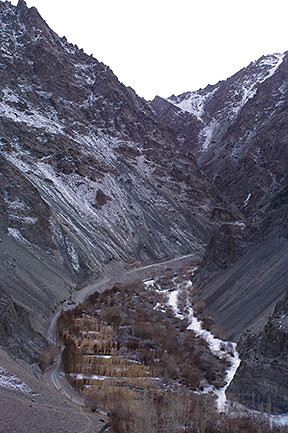
Trip to the Himalayas - Part I
October 19, 2019
I’m an animal person, have been my whole life, as discussed in some of my previous blog posts. I love all animals, but there have always been a select few that hold a truly special place in my heart – koalas, pandas, orcas, wolves, horses, and snow leopards. I have been lucky enough to see some (but not all) of these animals in their native environments. While it’s an amazing experience to see any creature in the wild, for these particular species, for me, it’s a whole different level entirely. I’d like to tell you a story about one such experience, a dream of mine that came true a few years ago. Snow leopards are my absolute favorite animals, and they are simply amazing. As you may have guessed from their name, they are a species of big cat, though they are one of the smallest. They have a lot in common with small cats as well as big cats, seemingly a bridge between the two. For example, unlike the other big cats, they physically cannot roar. The anatomy of their throat is more akin to small cats, which is what allows them to purr instead. Their fur is thick and super soft in order to provide them protection from the extreme cold of the Himalayas. Their tails are super long and fat when compared with other big cats. This extra size not only helps to provide balance as they climb and jump amongst the rock cliffs of the high mountains, but also to wrap more fully around the body and face to help keep them warm when curled up. Their paws are huge, acting like snowshoes in the thick snows of the mountains. Unlike other cats, their eyes are most often gray in color or even a pale green, rather than gold. Could it be to help them blend in with the white and gray of their snowy and rocky surroundings? Could it be to help their sight in dealing with the bright reflections of the sun off the white snow? I don’t know if anyone knows the answer to that yet, but it is certainly fascinating, and makes looking into their eyes wonderfully mesmerizing.
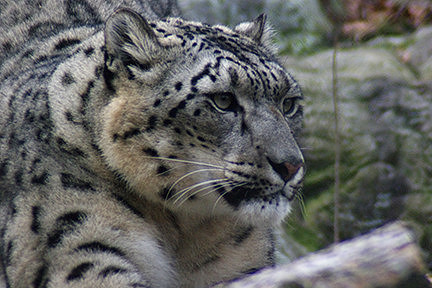
Snow Leopard at Stone Zoo. Massachusetts Snow leopards are one of the most elusive animals on the planet. They are an endangered species, specialists adapted to a specific environment and climate. They require huge territories to survive, and once were found throughout the mountainous countries of the Middle East and Asia. Today, their range has shrunk immensely, and there’s estimated to be only a few thousand left in the wild, scattered across a dozen countries. With such small numbers and living in such a hostile environment, they are rarely seen, even by those hardy individuals who live amongst the same mountain peaks. With all that, it’s no wonder they’ve earned the name, Ghost Cat. Additionally, according to everything I read on snow leopards growing up, they were the only big cat to have never attacked a human being in recorded history. The only record of injuries occurring to a human came when a herder startled a snow leopard amongst their livestock in an enclosure. The leopard accidentally knocked the person over as it dashed for the exit, not in an attack but simply trying to escape. That little fact certainly went a long ways towards romanticizing this particular cat for me as a child.
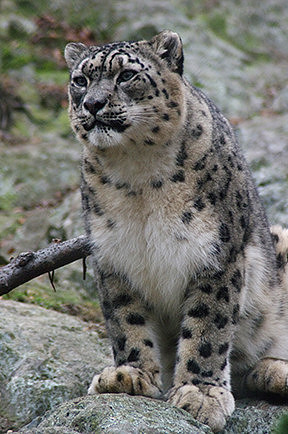
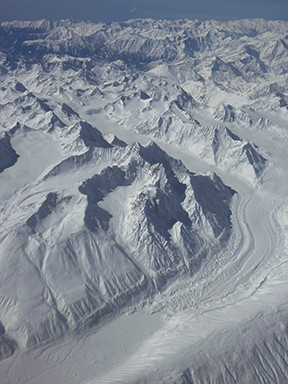
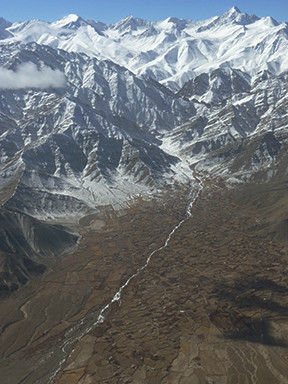
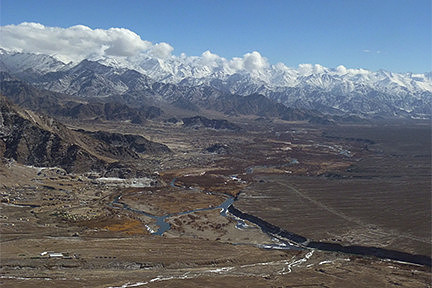
Snow Leopard at Stone Zoo. Massachusetts Growing up, I never dreamed it might be possible to go see a snow leopard in the wild. I simply hoped for a chance to see one in a zoo some day, but even that would be something of a miracle. Then, amazingly, one day in high school, I stumbled across an eco-tourism type of vacation, a trip to the Himalayas in search of snow leopards! I was blown away by the possibility. Could it be true?! The tour wasn’t terribly expensive, so surely I could save up the money to go. I just needed my mom’s ok, since I was only 15 at the time. Unfortunately, the tour was headed to an area that had been in the news a lot at that time for various troubles, so my mom rightly refused to allow me to go. I completely understood, but that didn’t stop me from feeling horribly disappointed. I had missed out on the best once-in-a-lifetime opportunity. A few years later, I finally had a chance to see a live snow leopard. I had gone out to visit my mom’s family in Iowa for a family reunion. While there, a few cousins took me to Omaha, Nebraska to the Henry Doorly Zoo. They had a snow leopard there, and I was over the moon, taking loads of photos. Later, right before we left, I needed to go back and see the snow leopard one last time. My cousin didn’t want me to be gone long, so I left my camera with her, knowing that would help. I went back into the exhibit and found the snow leopard waking up. I walked up to the glass, and the leopard walked over and looked deep into my eyes for several minutes. It was such an amazing feeling, that connection, and it brought tears to my eyes. The whole thing was an utterly fantastic experience, one that I will remember forever. As wonderful as that day at the zoo had been, it just wasn’t the same as if I’d gone on that trip to the Himalayas a few years earlier. As time passed, I would occasionally think back to that missed opportunity, filled with regret. It never occurred to me to research the possibility of trying to make it happen; I thought I’d had and lost my one and only chance. Then, amazingly, during the summer of 2014, while reading a photography magazine, I spied an ad for a Himalayan photography tour centered around a search for snow leopards! Maybe, just maybe, I was going to get a second chance after all. I started doing research and found there were actually several different companies offering snow leopard tours. Eventually, I decided on an eco-tour from a company based in California called Karma Quest. They had been doing this tour for 10 years, working with local villagers and conservation groups, and part of the cost of the tour was a donation to the local snow leopard conservation trust. Additionally, in the 10 years they’d been operating, they had successfully seen snow leopards each year! Obviously, there could be no guarantee, but that definitely increased my odds, so combined with everything else, I was hooked. I reached out to Karma Quest to see if they still had spots available on their next tour. Luckily for me, they did, so I then reached out to get permission from work to take the necessary 3 weeks off. With approval from my boss, I reserved my space on the tour. I spent the next 6 months preparing for the trip of a lifetime. On the first day of February 2015, I boarded a plane in Boston, Massachusetts, and two days later, in the wee hours of the morning, I got off a plane in Delhi, India. The tour company had arranged for someone to meet me at the airport to bring me to our hotel. After getting checked in, I spent the rest of the day relaxing in my room. Originally, my plan had been to use the extra day for a bit of sightseeing in Delhi, but the flights had really taken their toll, so I just needed the rest. The following day, I met the rest of the group, an American (Jen), a Canadian (John), an Australian (Fiona), four Germans (Gregor, Walter, Claus, and Anna), and an Italian (Arturo). We headed to the airport and boarded a plane to the city of Leh and the start of our amazing adventure. I was lucky enough to have a window seat away from the wing and watched the scenery below change from flatlands to brown and green mountains to snow-capped peaks and glacier-filled valleys as we flew north into the Himalayas. The city of Leh sits in the Indus River Valley on the northern side of the Himalayas. It is in a region known as Ladakh, in the state of Jammu and Kashmir in India. The Karakoram Range lies to the north, while the spine of the Greater Himalayas lies to the south. As we circled around to land, it was interesting to see the brown fields and Tibetan monasteries dotting the valley.
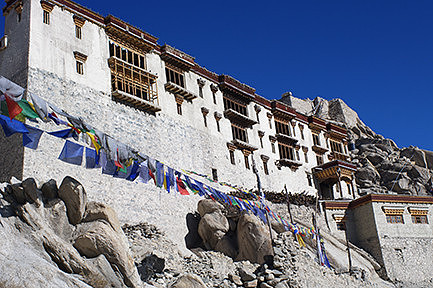
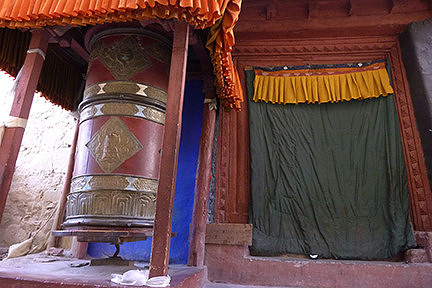
The Indus River Valley. Ladakh, India Once we were packed into our three transport vehicles, we were driven through the seemingly deserted city. You could tell it was definitely the off-season, just like at home, with the majority of businesses shuttered up for the winter. We arrived at our hotel, where we were treated to a Welcome Tea on the terrace while the staff got all our belongings inside. After getting settled in our rooms, we soon all met outside on the terrace once more, this time for lunch. After the meal, a few folks headed out to explore the city. I still wasn’t feeling 100% yet, so I stayed back at the hotel to continue resting and start acclimating to the altitude. At dinner that evening, we discussed plans for the next few days. We had two full days in Leh to acclimatize and explore before heading into the national park. Originally, the idea was to stay in the city and take it easy, just do some walking tours of Leh Palace and/or Leh Monastery as we felt able. However, none of us wanted to do that. Anna and Claus had been in the region ten years before, so they gave some suggestions for places to go and things to see, and we all jumped at the chance. Our first full day in Ladakh was spent visiting some of the nearby sites. We started the morning at Shey Palace. It was amazing. There were Buddhist prayer wheels and flags outside and multiple stupas of different shapes and sizes all around. The palace itself sat atop a small hill overlooking the valley with the snow-covered mountains rising in the near distance. I could easily have spent the whole day there exploring and photographing. Unfortunately, I didn’t get to do much of either. As we climbed the walkway, I saw a composition I really liked. Since I was at the back of the group, I had to wait patiently while the others explored and captured their own images. I spent the time getting other images of the surroundings, and when everyone else had moved inside, it was my turn. Consequently, once I was done outside and moved inside to explore, I only had a few minutes before they were telling me it was time to leave. It was a really great location, and I’m happy with what I got, but it would have been nice to have more time.
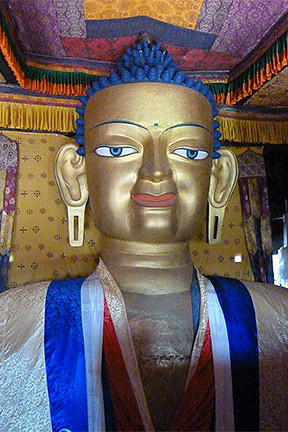
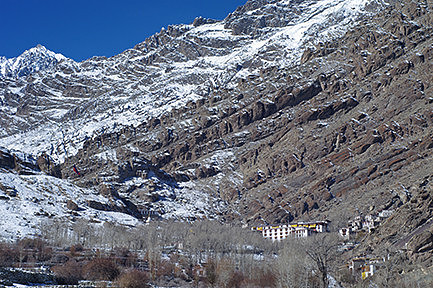
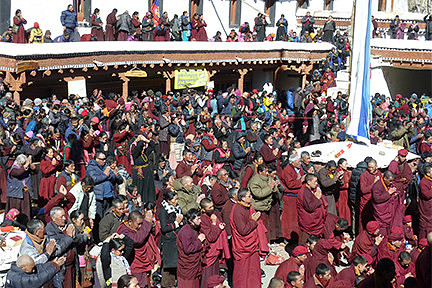
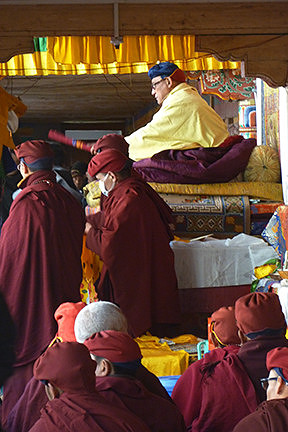
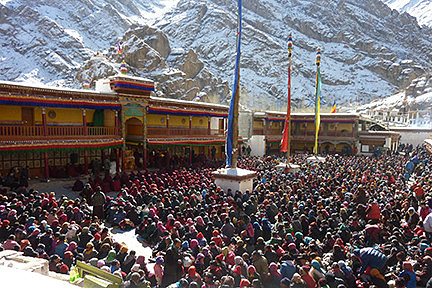
Large statue of Buddha in a small temple. Shey Palace, Ladakh, India From there, we headed over to Hemis Monastery. We had been the only visitors at Shey Palace, but it was a very different story at the monastery. Our timing couldn’t have been better. There was a Blessing Ceremony being held that day, and it was drawing folks from all over Ladakh to the small village. We had to park quite a distance away, then hiked up through the village to join the crowd inside the monastery. Even before stepping into the monastery, you could sense the festive air. There were vendors selling food and drinks, kids playing at the village prayer wheel, Buddhist monks greeting folks as they climbed towards the entrance. We spread out along the edges of the courtyard to observe the ceremony, and it was like nothing I’d ever experienced before. The small courtyard was packed full of people, the crowd chanting and praying. It was quite interesting, both to watch and to listen to it. I took photos from vantage points all around the courtyard - some of the buildings and decorations, some of the crowd, some of the monks, and some of the Lama Rinpoche performing the ceremony. Eventually, I moved back outside to make my way up to the giant statue of Buddha for more photos of the area before rejoining everyone at the cars.
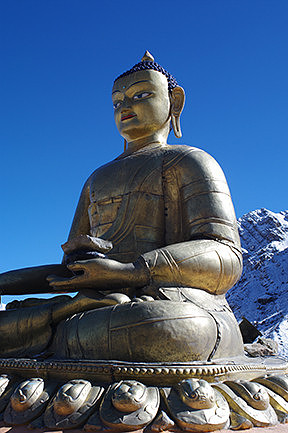
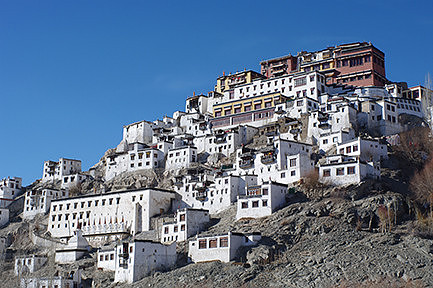
Giant statue of Buddha high above Hemis Monastery. Ladakh, India We finished off the day at Thikse Monastery. This gompa (monastery) is the largest in central Ladakh. I spent quite a bit of time wandering along the main path through the various buildings, getting images. Everyone else had disappeared quite quickly, and I was content to explore and photograph on my own. At one point, I was joined by a small group of boys, student monks just getting out of class. They spotted me taking photos and soon were having a lot of fun getting photos of me and each other with my little point and shoot camera. I’m glad they approached me, as I never would have had the courage to ask to take their photos, and now I’ll have the images they took of us to remember that encounter forever. That’s always one of my biggest regrets when I travel, not getting photos of people I meet. But, for someone as shy as I am, I never even think to ask until it’s too late. Eventually, I made it up and into the prayer room, joining the others for a few minutes before it was time to head back to the cars.
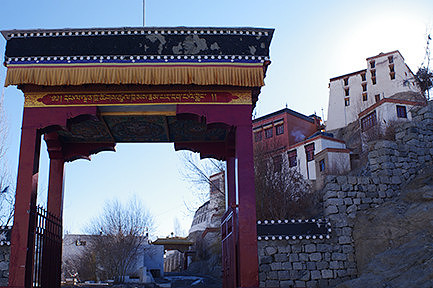
Decorated Archway at the entrance to Thikse Monastery. Ladakh, India
One of the decorated panels on the ceiling of the arch. Thikse Monastery, Ladakh, India
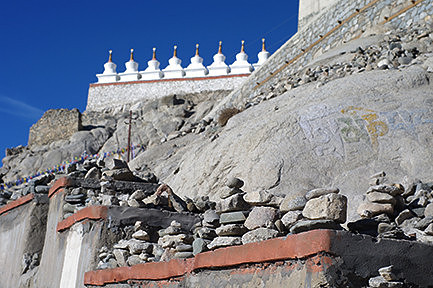
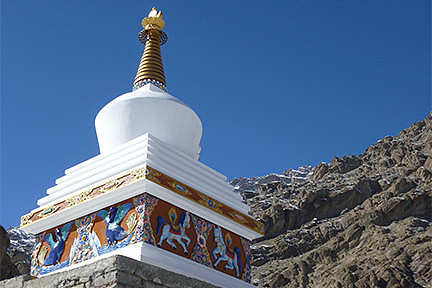
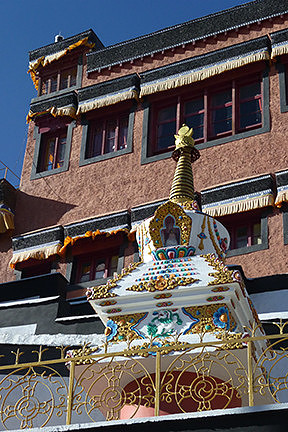
Decorated stupa. Thikse Monastery, Ladakh, India
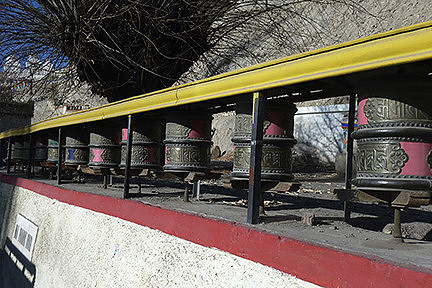
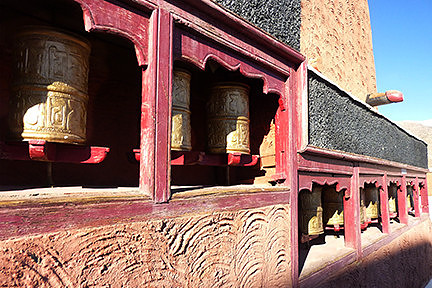
Prayer wheels. Thikse Monastery, Ladakh, India
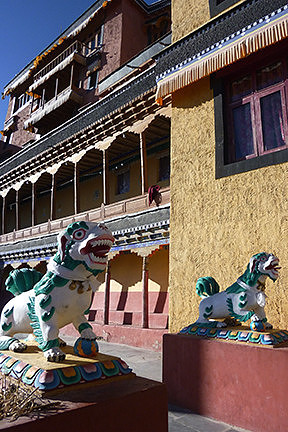
Elaborate statues guarding the way to the temple. Thikse Monastery, Ladakh, India
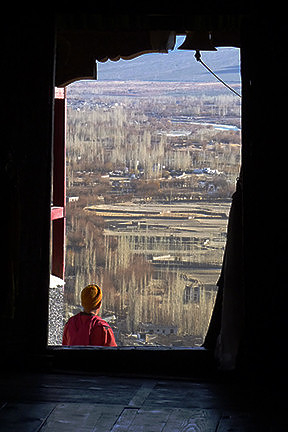
Monk outside the temple door, looking over the view of the valley below. Thikse Monastery, Ladakh, India All in all, it was a fantastic introduction to the region. I had a great day and really enjoyed not only the beautiful landscape but also the cultural, historical, and religious experiences we’d had. I was so happy I’d joined the others on this impromptu tour, rather than sticking to the original itinerary. The following day, we headed out on our second impromptu tour. This time, it was an all-day driving tour out to the border region with China, or Tibet to be more precise. This was going to be a landscape tour, rather than a cultural tour like the day before. We climbed into our three transport vehicles and headed southeast out of Leh once more. Before long, we turned off the main road, heading northeast across Ladakh up into the mountains. We soon came across a hilltop monastery, Chemre Monastery, and all the cars pulled over for a few minutes so we could snap some photos. After that, the road started to climb gently as it wound up the mountainsides. It was just barely larger than our vehicle with occasional snowy patches and a lot of very tight turns. Luckily, there was hardly any traffic, but it was a bit nerve-wracking whenever a vehicle came from the other direction.
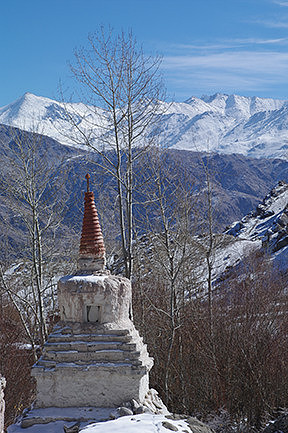
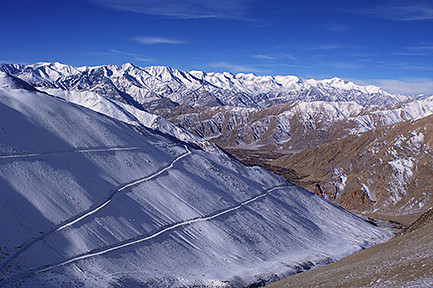
View of the road we'd traveled so far. Ladakh, India The scenery was absolutely breathtaking, and the drivers were great about stopping to let us get some pictures. Even so, I also snapped some photos out my window while we were moving, just to capture the memories of everything I was seeing. After climbing one particularly high section of road, we came to a stupa with a beautiful view. The ground dropped away quickly with snow-capped peaks going for miles in the near distance. We stopped, and I hopped out and ran around, trying to get an image of the stupa with the distant mountains as a background. I ended up sinking into the snow up to my knee, but it was definitely worth it!
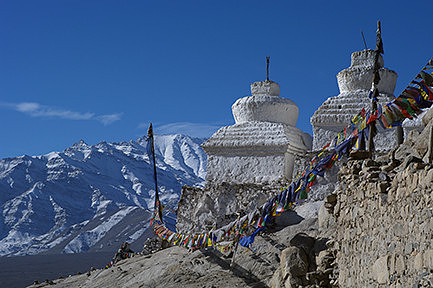
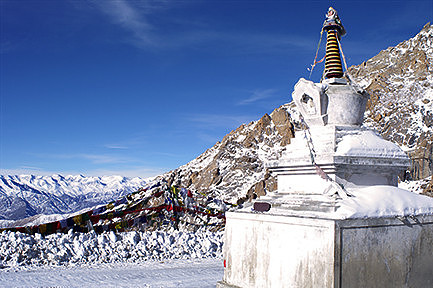
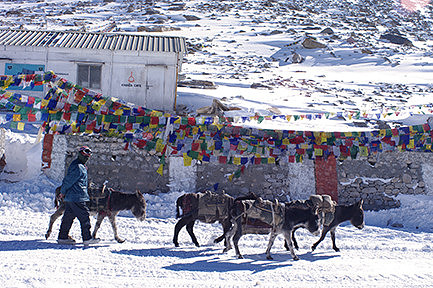
Stupa and prayer flags with a beautiful view. Ladakh, India Eventually, we came to Changla Pass. Actually, the name is Chang La, as ‘la’ is the word for pass. This mountain pass was the highest point on our trip at 17,688 feet and was the third highest drivable pass in the world. We stopped there for a little while for photos. The pass itself wasn’t very photogenic and had several military buildings, along with the giant marker. With the photography restrictions regarding military outposts, I simply contented myself with images of the marker and a local walking by with some donkeys.
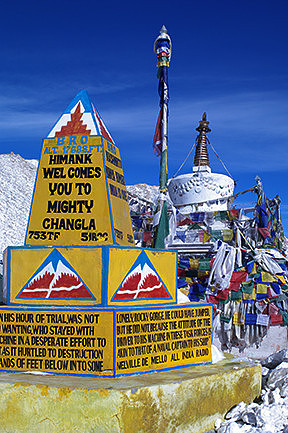
Marker, stupa, and prayer flags at Changla Pass. Ladakh, India
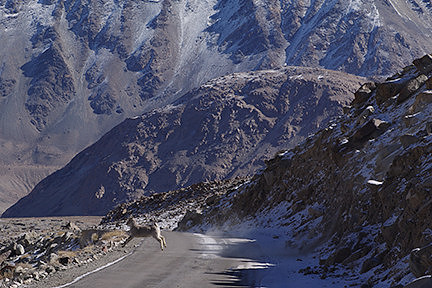
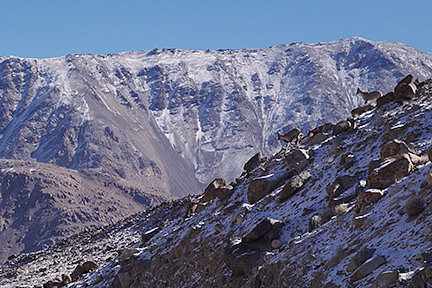
Local with his donkeys crossing Changla Pass. Ladakh, India From there, we headed down the other side of the pass and soon came to a halt in the middle of the road. The driver of the first car had spotted some Bharal (Himalayan Blue Sheep) on the rocks above. We all clambered out to get photos. In total, there were 18 sheep that crossed the road ahead of us in three different waves. It was an awesome experience, even though I had only brought landscape lenses with me that day.
Bharal crossing the road. Ladakh, India
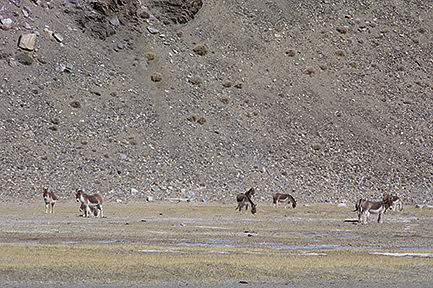
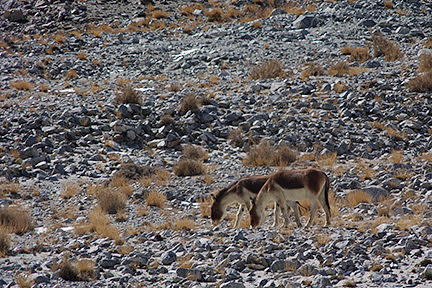
Two more Bharal coming down to cross the road. Ladakh, India After stopping in a village en route to pick up our special permits, we entered Changthang Wildlife Sanctuary. We soon pulled over for more wildlife, this time some Kiang, or wild Asses. I took a few photos, but I was having a really difficult time seeing through my 2x converter and lens well enough to focus. I hadn’t had that issue before, and it had now happened each time I’d tried to get images with that combination. It had me a bit worried about the rest of the trip.
A small herd of Kiang. Ladakh, India
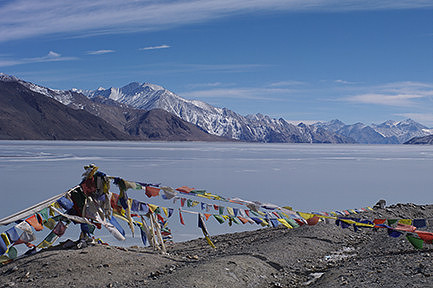
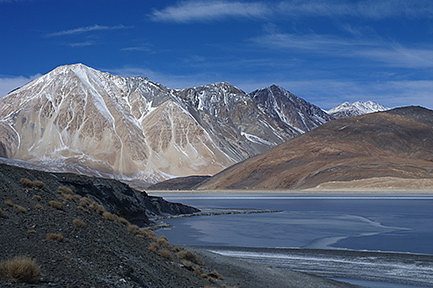
Two Kiang near the road. Ladakh, India Not long after getting back on the road, we passed a sign for the first view of the world famous Pangong Tso, our final destination of the day. We continued heading downhill before arriving on the shores of the lake. This tso, or lake, is at an altitude of 14,270 feet, is 83 miles long yet only 3.1 miles at its widest point, and approximately 60% of its length is in Tibet. The border between India and China was somewhere off to our right, hence the need for special permits to enter the area. The lake was absolutely amazing, surrounded on all sides by a mix of rock and sand-covered mountains and snow-capped peaks. The lake itself was almost completely frozen, but the various patches of ice had different colors and designs, contrasting interestingly with the nearly black patches of still-open water.
Prayer flags on the shore of Pangong Tso with a view down the lake towards Tibet. Ladakh, India
Mountains near the shores of Pangong Tso. Ladakh, India We all spread out to wander around and get photographs. Some folks headed out onto the lake itself, but seeing that it wasn’t completely frozen, I felt it safer to remain on shore. A few members of our group were avid birders, so they set up scopes to check out the birds congregating in those open patches of water. After a little while, we sat down by the vehicles to have lunch before the long drive back to Leh. We stopped only a couple of times on the way back for photos, and reached the city just as darkness fully closed in.
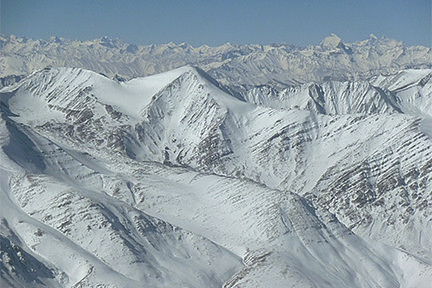
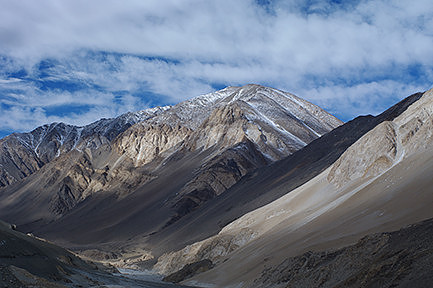
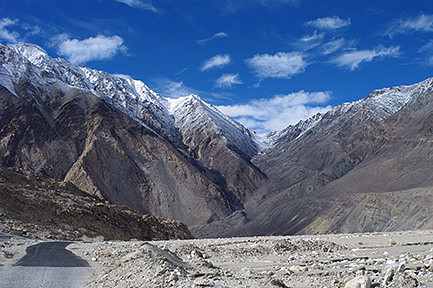
Mountains of Ladakh. India
The road through the mountains of Ladakh. India It was another fantastic day, and I was so happy to have gone on this tour as well. Not only did we get to see more of the region and its amazing landscapes, but we had our first introduction to the wildlife of the area. While I didn’t get the greatest shots of the animals we’d seen, it still made me very excited for the rest of the trip. The next day, we checked out of the hotel and loaded all our gear into our three transport vehicles. We stopped to pick up our snow leopard expert/head guide, Jigmet, and two other fellows who would be working with us over the next several days. Then, we headed out of Leh, southwest towards Hemis National Park. We crossed over the Indus River, passing Spituk Monastery up on a hill. We turned onto a smaller road that took us through a small village before entering a large plain. Eventually, the plain rose into a plateau as we drew ever closer to the mountains. We passed below another monastery, Phyang Monastery, situated partway up the mountainside. Before long, we had crossed into the national park itself. After that, the road turned and started snaking its way deeper into the mountains. Eventually, we came to a halt where the curve of the road had opened up a beautiful vista. There were snow-capped peaks rising above the Indus River in the valley below. Not only was it a beautiful location, it was a great place to spot Blue Sheep, so we stayed there for a while, scanning the slopes and ridgelines for animals.
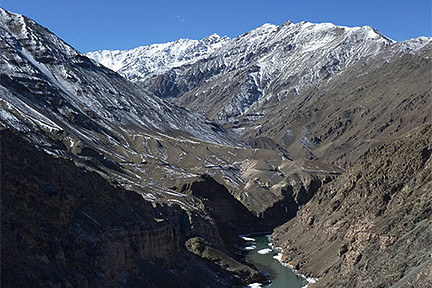
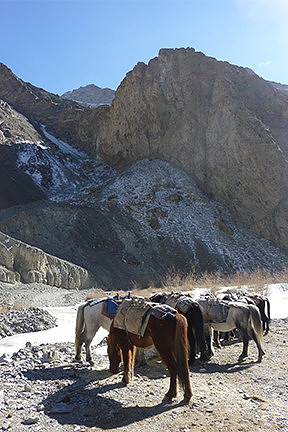
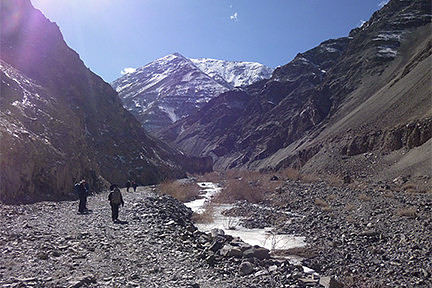
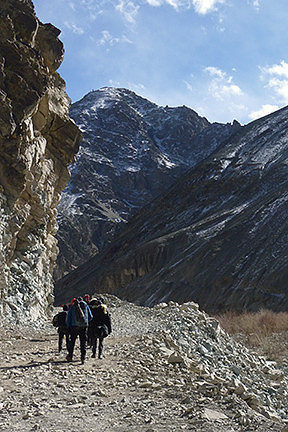
The Indus River and snow-capped mountains. Ladakh, India Not long after continuing on, we arrived in the village of Zingchen. It was a tiny village, and if they hadn’t mentioned it, I wouldn’t have realized it was an actual village. I don’t know if the homes were actually off the road out of sight or not, but I honestly didn’t see any. Apparently, this village is the official camping area for the summer treks into the park. We drove a little farther until reaching the end of the road. We climbed out and milled around while all the staff worked on unloading the gear from the vehicles. There was a large group of ponies and donkeys waiting, and they were going to load our gear onto the animals to pack it in to camp. Soon, we headed out as a group, hiking towards camp while the animals were still being kitted out. The ‘trail’ was the width of a car and covered in loose shale, rocks, and boulders. They were in the process of extending the road, so we were actually hiking along the initial groundwork of the planned route. It was very tricky footing and somewhat slow going, at least for me.
Pack mules and ponies at the start of our trek. Ladakh, India
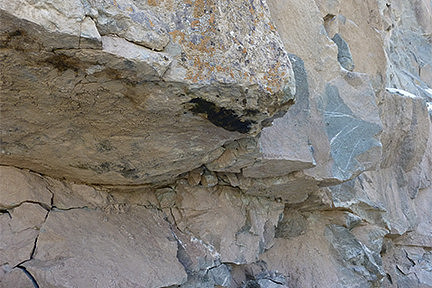
Our group trekking towards camp. Ladakh, India About ten minutes into the hike, Jigmet had us all stop. He wanted to point out a snow leopard’s scent mark on the rock face next to the trail. Like all cats, snow leopards will spray certain areas in their territory to let others know they’ve been there. They will also rub their heads on those areas, and the combination of the two leaves a distinct scent that can be identified by others as specific cats. Nearby, there was also a scrape mark in the loose dirt and rocks, again something that all cats do. It was so cool to see evidence of wild snow leopards right there, in person, not far from where we’d be camping!
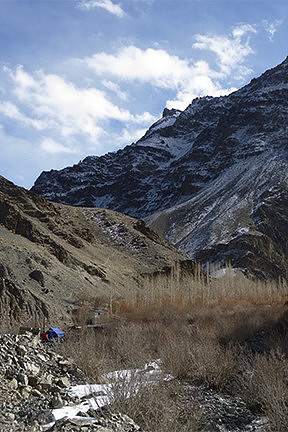
Our group hiking towards camp after lunch. Ladakh, India After a break for lunch a little while later, we soon arrived at our campsite. Once all the tents were set up, we were given a little time to unpack and sort ourselves out. Then, it was time to head up to the spotting knoll for the rest of the afternoon. We continued along the road past the other camps, then turned onto a small trail heading into a valley. Almost immediately, we turned onto another trail to climb up onto the top of a nearby knoll. It wasn’t high, but it was steep, and the trail was all loose dirt and rock, extremely dusty and very slippery. It was a bit nerve-wracking, as it was such a far cry from the bedrock, tree roots, and hard-packed dirt of the trails back home.
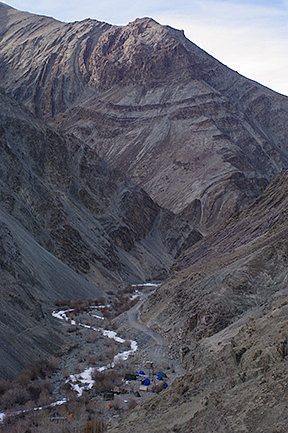
Our first glimpse of camp below the spotting knoll. Ladakh, India
Looking down on our camp nestled by the river from the spotting knoll. Ladakh, India
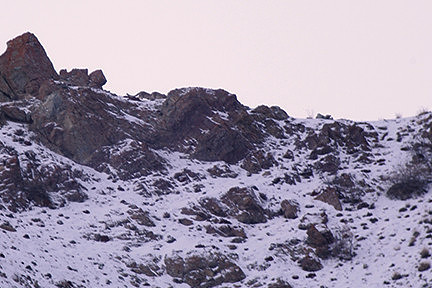
Looking further up the valley from the spotting knoll. Ladakh, India We stayed up on top of the knoll with folks from all the other camps for several hours. It was a great first day. We saw several groups of Bharal (Blue Sheep), a Lammergeier bird (Bearded Vulture), and a Himalayan Snow Cock. Unfortunately, I didn’t get any photos, but it was still great to see everything. After we made it back down to camp, I found out that one of the camps was for a BBC crew. They were here to try and film the snow leopard. In the end, they were successful. The series Planet Earth II that came out in 2017 had their footage from this trip. I highly recommend watching it! Dinner for our group was a short time later, and it was fantastic, just as it would be every night while there in the park. There was a wide variety of food, not only during this meal, but across the entire week. In addition, they took into account any dietary restrictions – one participant was vegetarian, and I have several food allergies. They made sure there was plenty to eat for everyone, even making special dishes for us when we couldn’t have what everyone else was having. We didn’t have to ask. They had already planned it out that way, having ours ready at the same time. It was really wonderful. The following morning, we were woken up early to climb back up onto the spotting knoll to spend a few hours searching the ridges and slopes before breakfast. The climb up had really taken a toll on me, so when I made it to the top, I didn’t get my camera out and set up right away. Not long afterwards, there was a lot of excitement among the several groups of people. I happened to be standing near Jigmet, so he gestured for me to take a look through his scope. I stepped up and peered carefully though the eyepiece and found myself looking at a snow leopard! I was completely overwhelmed. Here I was, after all these years, finally in the Himalayas on a trip I’d thought would never happen, which was a blessing in itself. And, now, on our very first full day, I was actually seeing a snow leopard, something I hadn’t really thought would happen! I just couldn’t believe it. I stood there in awe, watching the snow leopard way up on the ridge across the valley slowly walking along, looking around as it went. After a few minutes, I stepped away so other people could have a turn looking through the scope. I was speechless and a little dazed. Then, one of the leaders of another group came rushing by, calling out “Go to the front scopes! Go to the front scopes!” I wandered forward and found another scope that no one was using. I gently stepped up and peered through, not knowing if it was trained on whatever he’d seen or not. Almost immediately, I spied a snow leopard laying down with its head up, in a Sphinx-like pose. As I watched it, marveling at its beauty, a second head lifted behind the first and gave a great big yawn. There were two snow leopards lying there!! I was absolutely blown away. I gazed at the two most beautiful creatures I’d ever seen, watching them simply lying there for a little longer, before stepping aside once more for others to have a look. I wandered around the top of the knoll, not knowing what to think or how to feel. Part of me was absolutely ecstatic, mentally doing a happy dance at everything I’d seen so far. Another part of me was having trouble processing it, couldn’t fathom that it had truly happened. A few minutes later, folks were saying that the snow leopards had moved off and over the top of the ridge to the other side. That finally made it fully click, that it had all indeed really happened. I decided to go ahead and pull out my camera and get it set up, just in case they should reappear. I wasn’t sure what area of the mountains on the other side of the valley we’d been looking at, so one of the locals who works for the national park helped me get everything lined up. As he was doing so, one of the snow leopards reappeared, so he quickly snapped off a few photos with my camera. He stepped aside so I could look through. When I looked, I saw both snow leopards standing side by side at the very top of the ridge. They were both looking off in the opposite direction. I didn’t think it would make a good photo with their heads turned away, so I waited. That was a mistake. I was hoping for a ‘perfect’ shot with one or both leopards looking in our direction. But, I had almost no wildlife photography experience. What did I know about what makes a ‘good’ shot when it comes to animals? Yes, it’s common in portraiture to have the animal or human to be looking towards the camera. However, those aren’t the only acceptable photos. You might have photos where the subject is looking into the distance, creating mystery because you’re unsure what has captured their attention. You might have photos that are extreme detail shots where you only see a part of the subject, such as the ear of an elephant or the wing of a bird or the paw of a lion. You might have photos where the animal is small in the frame and include a large amount of their environment to tell a greater story. Additionally, I’ve since learned that the goal of wildlife photographers is to be able to get images of the animals without disturbing them or changing their behavior in any way. The best strive to keep far enough back so that the animal isn’t aware of them, or at least doesn’t react in any way to indicate it’s aware of them. They want the animals to remain calm and continue going about whatever they were doing. This means using longer lenses and having more images without direct eye contact. To have an image where the animal is looking straight at you, straight into the lens, that is often frowned upon by the wildlife photography community, because with amateur photographers, it usually means you were too close to the animal. I shouldn’t have worried about trying to get the ‘perfect’ shot. Where this was such an amazing experience and such a rare animal to even see, I should have just been snapping away, getting as many photos as possible to document the moment and the experience. With almost no wildlife photography experience, I should have been taking as many photos as possible. Any and all shots I could have gotten would simply have been more experience and increased the odds that I might get lucky with a good one. I honestly don’t know what I was thinking.
My only photo of the two snow leopards, heavily cropped. Ladakh, India In the end, they never looked towards our side of the ridge and soon started walking over and down the other side. When I realized what was happening, I managed to get one photo before they disappeared behind a rock. A short time later, one of them reappeared. My field of view was so narrow, however, that I couldn’t find it with my camera. Namgil, one of our guides, took over and managed to find it. He snapped off a few photos before it disappeared again. And, that was it. It was around 8:15am, and we didn’t see them again that morning. I was unbelievably happy, though, despite my error with the photography. I honestly had never dreamed we’d actually see any snow leopards. It was an amazing experience for me to simply be in the Himalayas after believing for so long that it would never happen. When we saw the scent marking and the scrape the day before, that had been a real bonus. To think, there was actual proof of wild snow leopards less than a mile from where we’d be camping. I hadn’t expected that and thought that was even better than I could have imagined. Now, I’d seen actual snow leopards several times, even had some photos (though not many and not any ‘good’)! It was just unbelievable. I truly couldn’t fathom it. This trip was way beyond my wildest dreams. This was truly the best experience of my life, and even if we didn’t get another opportunity, I’d still consider myself the luckiest person on the planet. I wasn’t even sure how many snow leopards we’d actually seen, but later at breakfast, Jigmet told us that there were two - a mother and her nearly full-grown cub. I wasn’t sure what else the rest of this trip was going to have in store for me. This was only our first full day in the national park. It was February 8th, and I still had almost two full weeks before I’d be returning home. Whatever it might be, though, I had just achieved a dream that I’d had for 20 years. I had been privileged enough to see a pair of beautiful snow leopards high up in the mountains of India. This amazing feeling of serenity washed over me at everything I’d already experienced, while still allowing me to look forward with excitement to whatever may come next. ~ ~ ~ ~ ~ ~ ~ ~ Click here to read the rest of the story. |