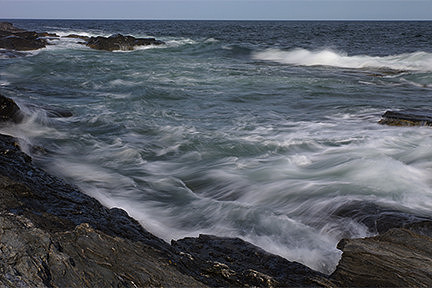
Long Exposure Seascapes
April 19, 2025
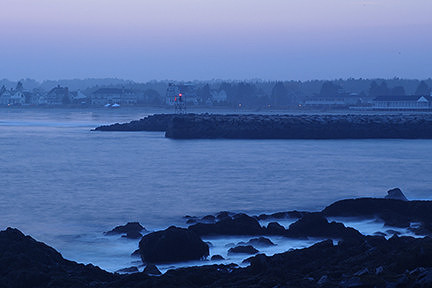
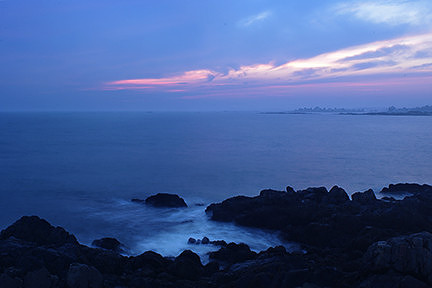
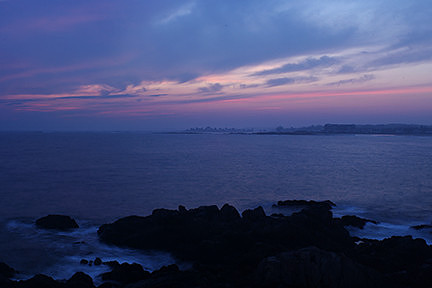
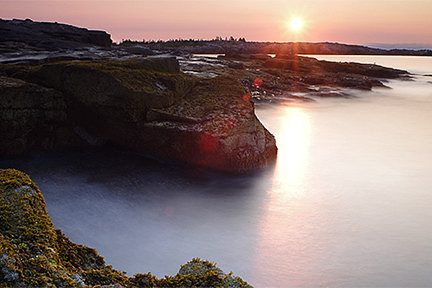
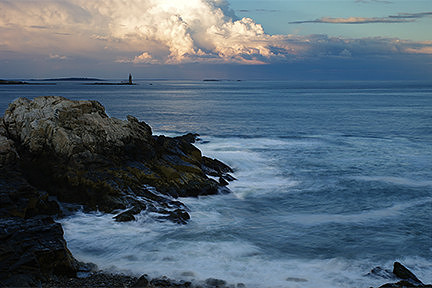
I’ve lived my whole life less than an hour’s drive from the ocean, whether at various locations in Maine or when I was overseas for grad school. Given this lifelong proximity to the coast, one would think I’d have a lot of experience with seascapes. However, that’s simply not the case. While I do have a lot of photos I’ve taken over the years, most of them were simply snapshots of the day’s adventure with family or friends somewhere along Maine’s extensive coastline. As I followed more and more photographers on YouTube, I started seeing lots of amazing photographs of seascapes from around the world. Some of them were capturing spectacular wave action before or after storms using extremely fast shutter speeds. They were certainly eye-catching and awe-inspiring photos. However, the images that spoke to me the most were all the ones taken with slow shutter speeds. Some of them had the shutters open for so long that the sea turned to mist. Others had the shutters open only long enough to capture interesting patterns of lines in the water from the movement of the waves amongst the rocks. I loved seeing those beautiful images and wanted to try my own hand at capturing long exposure seascapes. Sunrise and sunset were perfect for the first foray into this type of photography. With the lower light levels with the sun at or below the horizon, it was easier to get longer shutter speeds naturally. All you needed was a tripod to keep the camera steady. My first semi-successful shoot was from one such sunset in December 2015. I did a lot of experimenting with compositions, exposure, and trying to get some interesting wave patterns. I’ll be the first to admit that the photos weren’t much, the sea was pretty calm, and I soon became distracted when the clouds exploded in color, but still I liked the effect that I was seeing and was relatively happy with what I captured.
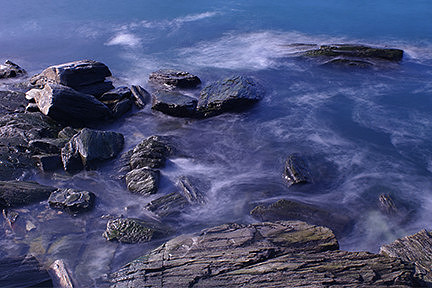
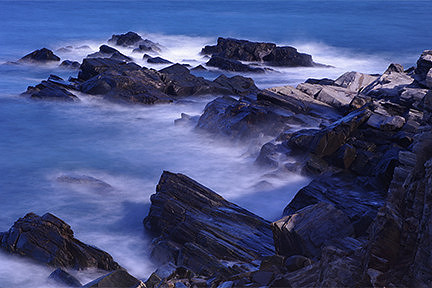
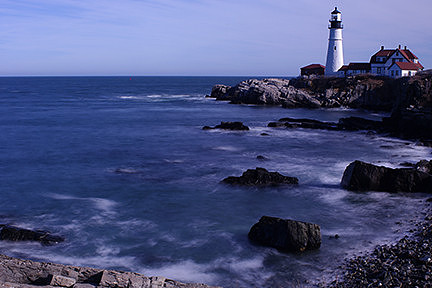
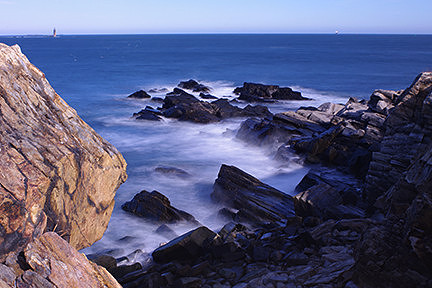
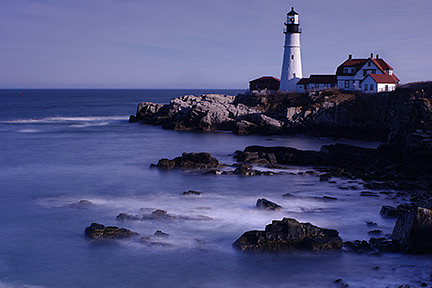
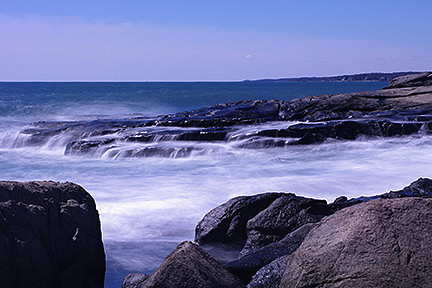
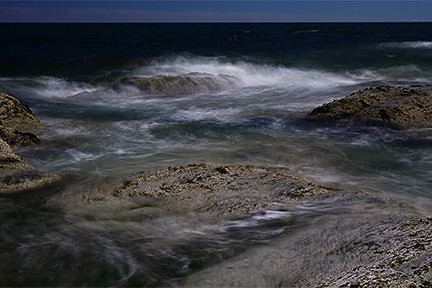
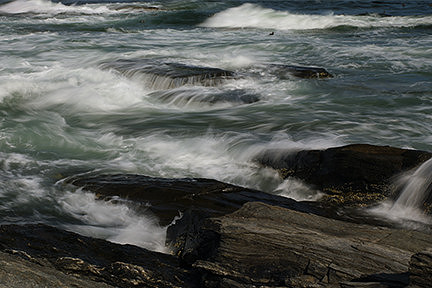
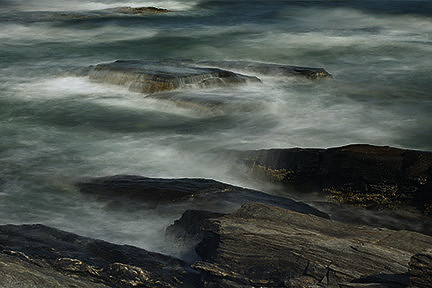
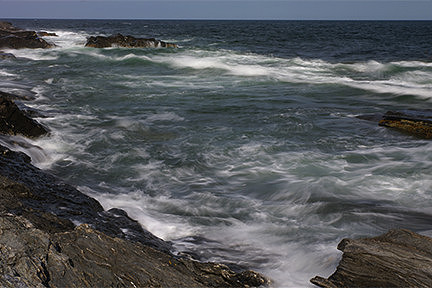
A few months later, I bought my first ND filters, a 6 stop and a 10 stop that would screw onto the end of my lens. Neutral Density filters act like sunglasses for your camera, cutting the amount of light entering the lens. This lower light level then allows you to have longer shutter speeds even in bright daylight. I could now head to the ocean to try more long exposures while it was bright enough to see to compose and focus my shots. It also gave me access to locations that are closed from dusk to dawn, such as Portland Head Light. I drove straight to Cape Elizabeth from the camera store and spent several hours wandering the cliff paths of Fort Williams Park experimenting with my new filters. The sky wasn’t particularly interesting that day, but that didn’t matter to me. The sun was out, it was beautiful, and the waves were the focus, the point of the photos, not the sky. I took loads of photos of all sorts of subjects, but the ones that I spent the most time with fell into two categories. The first were compositions of the various rock formations with the waves swirling around them. The second were compositions that included Portland Head Light or Ram Island Ledge Light. In the end, I had a great time that day and came away with some photos I was really happy with.
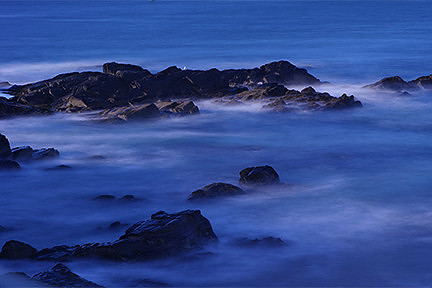
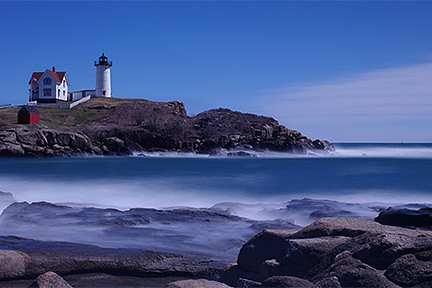
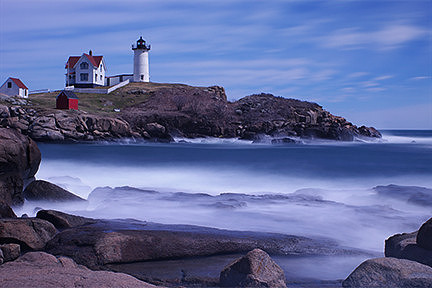
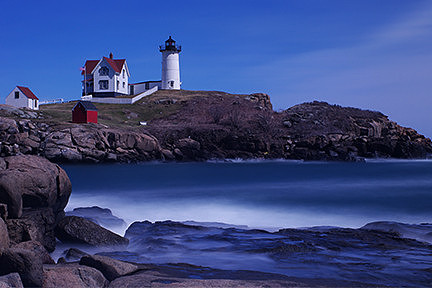
A month later, I headed in the opposite direction to Nubble Light. When I arrived, I had a slight twinge of regret, as the sea was raging, and I was there to experiment with smoothing out the water. But, that was ok. I did take a few photos at the end with no filters just to catch the action. Until then, though, I headed out to a safe place on the rocks to try to find a good composition. Once I settled on one I liked, I simply experimented with the shutter speed and taking the photos at different points in the waves’ movement to see how things turned out. Most of those images had more of a misty quality to them than the ones I’d taken at Portland Head Light. While longer shutter speeds can have this effect, the speed of the water itself can also create this effect with faster moving water. As such, I think it likely was a combination of both of those factors. It was an interesting day, and I learned a lot from it.
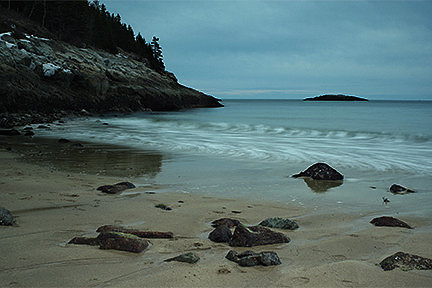
Over the next few years, I occasionally found myself along the shore, attempting more long exposure seascapes to varying degrees of success. In theory, I should have spent a lot more time practicing so that I could more reliably get the kinds of images I wanted, either here at home or on a trip elsewhere in the world. The reality, though, was that just didn’t happen. Around the same time I decided to try my hand at this type of photography, I was also trying my hand at lots of other types of photography, too. Consequently, any time I headed out with my camera, I might have ended up working on any number of different techniques, experimenting with new gear, or simply wanting to focus on different subject matter.
While I didn’t do the ‘proper’ thing in practicing long exposure seascape photography consistently, I don’t regret it. I love learning photography, love experimenting with so many different aspects of it, and love so much of what Maine and the world has to offer. I have to go to places and take photos of what strikes me in that moment. I can’t force myself to take photos just for the sake of it, as the results are always terrible when I do. That may mean that I grow more slowly as an artist, but it keeps me happier with my craft and the results I achieve. I’m proud of what I’ve learned so far, the photos I’ve created up to this point, even if they’re not perfect or exactly what I was going for. It just means that I can keep getting out there, keep trying, and keep finding joy in the experience.
The biggest lesson I’ve learned so far in regards to long exposure seascapes, is that you can’t plan the perfect photo. Every wave is unique, so even if you have perfected the composition and have the lighting and exposure settings exactly right, you will still need to do a lot of experimenting on every single outing. You have no way to know exactly how the waves will look from photo to photo, and thus, you’ll need to take a lot in hopes of getting one where it all comes together just as you hoped. I find a lot of comfort in that, the fact that there will always be some experimentation and element of the unknown with this type of photography, that there will always be an abstract quality to the photos. It takes away a lot of pressure that might otherwise exist and makes the entire process more exciting and one of discovery and artistry. And, as such, I would urge anyone to get out there and give it a whirl. I hope you would find as much enjoyment in the process and the results as I do.
|