Conservation and Environmental Awareness
October 19, 2024
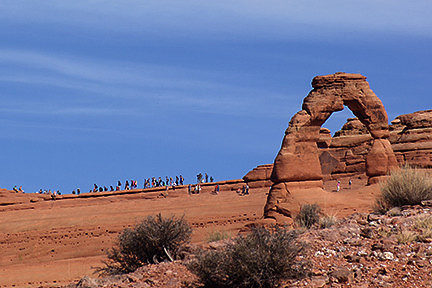
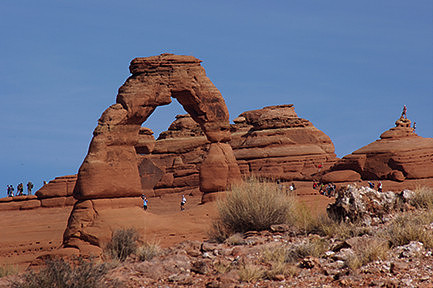
I have always loved our world, the great outdoors and the wonderful animals that inhabit this planet with us. I feel more alive and more comfortable with myself whenever I am out in nature. I have always believed that if more people could get outside and experience the wonders around us, they wouldn't fear it so much. It would bring them joy and peace. It would calm their anxieties. It would help them to understand our world better and maybe cause them to feel compassion and concern for the environment and for the animals we share it with. It would benefit individuals with their health, both physical and mental, our greater society as a whole, and also the ecosystems around us. These ideas have always been important to me, but in the past, they were more subconscious feelings than thoughts to be acted upon. In recent years, however, they have come to the forefront more and more, driving a desire to take action. At the same time, however, I’ve come face to face with a dilemma that many others are also struggling with. How do you promote the outdoors while still protecting it? Our national park system recently celebrated their 100th birthday and had a huge campaign to get more people to the parks. That was a wonderful concept, but it worked almost too well. With the popularity of the internet and social media, more and more people are heading outdoors in hopes of visiting the places they are seeing online and to get their own images. Many of our parks and other areas don't have the infrastructure or staff in place to handle this massive influx of people, and it has been wreaking havoc on the locations. The more people who visit an area, the more destruction it brings about. Some of this may be from people who are unconcerned with the damage they may cause, while some is completely unintentional, simply from wear and tear or lack of knowledge about a sensitive ecosystem.
We need to have a balance of getting people to love going outdoors without 'loving' it to death. Unfortunately, I don't know what the answers are, and that makes me feel helpless. I want to do what I can to care for the environment. I want to play my part to combat things like global warming. I want to help get more and more people involved without doing greater damage in the process. But, how? I think, all any of us can do, is to make personal decisions about what speaks to each of us and do the best we can, no matter how big or small. With these goals in mind, I have started to think about what I can do as an individual to do my part. First, there are the easy things, making changes regarding my every day life – recycling, purchasing choices, energy consumption, composting, etc. I have always recycled, but I am now trying to think more consciously of what the items I'm purchasing are made from, how they’re packaged, and how they'll eventually be disposed of. For example, I recently had to purchase a new phone. This also required me to purchase a replacement case, as the one from my old phone didn’t fit the new one. However, rather than buying one of the many plastic cases that can be found for sale anywhere you look, I found an online company that makes biodegradable phone cases. These cases are environmentally friendly, in the manner of their production, in their shipping, and in their disposal. I won't have to worry about what will happen to my phone case in the future when it's no longer needed. It won't be sitting in a landfill or polluting the ground/air/water or killing animals. Another example of a recent purchase was a battery bank to take with me on trips to charge up my phone, headlamp, and camera batteries. It used to be almost impossible to find portable power, but as the electronics industry has boomed, portable power options are becoming more and more diverse and widely available. Electronics, in general, are not good for the environment, containing a lot of parts that are actually dangerous if disposed of incorrectly. Again, rather than just buying one of the many options out there, I dug deeper, hoping to find something more environmentally friendly. I found a company with this same philosophy, building power banks made from a combination of plants and other biodegradable materials and recycled materials. Additionally, this company’s concern for proper recycling and safe disposal of electronics extended to anything the buyer might already own. With every purchase, they would send a container for the buyer to ship back, free of charge, up to one pound in electronics for safe disposal and recycling.
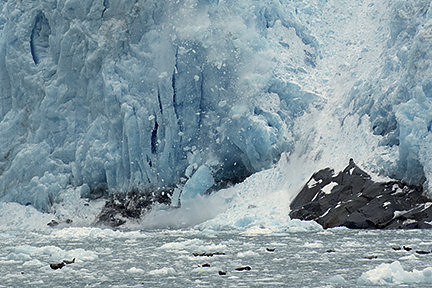
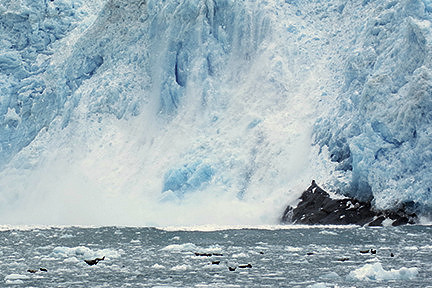
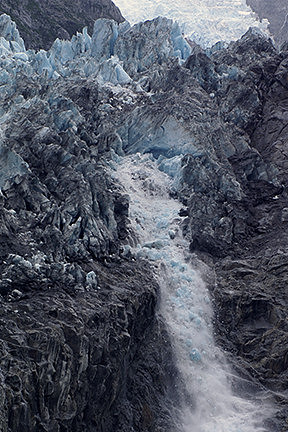
A few minutes later. The entire 'cliff-face' of ice had completely disappeared, dropping into the water. Kenai Fjords National Park, Alaska
Beyond these types of changes in my lifestyle, the focus of my photography has also been evolving. I find myself drawn more and more towards nature photography – broad landscapes, intimate scenes, flora, and fauna – and less on cultural landscapes. I want my images to inspire others to develop a connection with and compassion for nature. In doing so, it’s my hope that my photography will help facilitate the protection and conservation of these landscapes and the wildlife that calls them home. As such, I’ve decided to remove my cultural photography from the primary areas of my website, which will be devoted entirely to the natural world from now on. I still want to be able to share these types of photographs, as a love of history and culture will always be a part of me, but that will be through blog posts and links to special galleries only going forward. In addition to these changes in my personal life and my photography, I’ve been trying to figure out what I could do to help others, as individuals and in relation to the environment. I started a YouTube channel to convey a love for nature and the outdoors and the mental health and conservation benefits that come with it. My hope is that it will serve as inspiration for others. Many people in this world suffer from depression or anxiety to one extent or another. Immersive videos have the ability to bring the positive feelings that nature gives us to those that can’t get out there themselves. This can do great things for their well-being. Occasionally discussing mental health while in such relaxing scenes the environment can provide will hopefully help reduce the stigma around that subject matter and give people courage to speak up and seek help. My photography is also very much a part of the channel, so maybe it will inspire others to take up photography as well. Getting outside with a camera is a great way to enjoy nature and has lots of benefits towards mental health. Finally, if my videos can help others fall in love with the great outdoors and the animals that share the planet with us, then maybe they can be motivated to act to protect endangered ecosystems and the animals within. Next, I wanted to see what action I could take in regards to conservation. If I wanted my videos to hopefully lead others to act, I needed to do so myself. I started researching organizations that had conservation as a big part of their mission statement to see what I could learn and how I could contribute. During that research, I found and joined “Nature First”, an organization dedicated to responsible nature photography. They have seven principles to help guide photographers (professionals and enthusiasts alike) in better ways to protect the environment while still being able to be out there doing what they love. I believe those principles are important for everyone, not just photographers, as everyone has a camera in their pockets today with phones, and the principles can be extrapolated to other activities as well. The first principle (where the organization takes their name) is to put nature first above photography. What this means is that no photo is worth causing damage. If you’re out and about and see something cool, a pretty scene or a baby animal, but the only way to get a photo might cause damage, don’t do it. For example, when talking about a landscape, there are delicate areas (such as restoration areas) that cannot have people walking through them. To do so will destroy what they’re trying to protect. Or, when talking about wildlife, if you get too close, you could stress chicks in a nest, cause the parents to abandon them, or attract predators to the location. Getting the photo simply isn't worth the subsequent damage. Some of the other principles are related to this - know and follow any rules/regulations about an area, reflect on the impact of your actions, and educate yourself about the subject matter, ie the location and/or animals you wish to photograph.
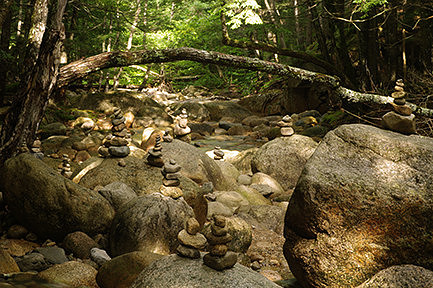
Another major principle of Nature First is essentially the same Leave No Trace principle found in hiking areas and national parks. The idea is to not leave trash but also to not disturb the area you're in. Do not collect rocks or leaves or twigs, build rock cairns, pull the bark off trees or throw rocks into the water. Doing these types of activities can have consequences on the plant, animal, and fungi life in the area. This is where the saying 'take only pictures, leave only footprints' comes in.
Finally, Nature First urges photographers to have a bit of discretion in terms of sharing locations. It's not that you can't share a location at all. And, it's not that they are trying to keep a location secret so no one else will be able to get that photograph. Instead, it's more a concern about trying to protect delicate, fragile landscapes and endangered, threatened species. I have decided to embrace this principle in the following ways. Photos posted on my websites and social media will only show generalized location information. For example, if it's a location in the states, it may have the town name, state name, and country name. If the location is in a park, it may have the park name, state name, and country name. If it’s a tiny park and the photos are of an endangered species, it won’t state the park name but only state and country. If a location is outside of the US, it may have even less locational information. Videos of well-known locations (parks, hiking trails or scenic areas) won’t have much need for discretion. Videos of sensitive areas or endangered animals will have as much locational information removed in the editing process as possible. In my research of conservation-minded organizations, I looked into the Arbor Day Foundation. I’ve known about them most of my life but wanted to learn a bit more. The Arbor Day Foundation actively works to replant trees around the world in a healthy, sustainable way that will improve the environment long-term. They ensure that the trees being planted are in locations that need them, are the types of trees that are best for that ecosystem, and are trees that have the best chances of survival in that environment. I realize that it can be a bit hypocritical that I drive long distances with only myself in the vehicle or take airplanes to far-flung locations for photography trips while sitting here discussing environmental concerns. I’d like to do something to offset the carbon emissions of those trips, and I believe the Arbor Day Foundation is the perfect way to do so. Going forward, I will make a donation every time I take a trip so that the Arbor Day Foundation can plant more trees somewhere in the world. We all have to make our own decisions about what we can do and are willing to do when it comes to conservation and the environment. I am not trying to tell anyone what they should do or not do. I simply wanted to speak up about where my heart is and the direction my photography will be taking. I wanted to provide a few examples of some of the things I'm trying to do to make our world a better place for everyone and everything in it. I hope this will inspire others to take strides to help protect nature while embracing all the benefits that come with getting out there and enjoying it. If we can find ways to live in harmony, we’ll all be better for it, individually, communally, and environmentally.
~ ~ ~ ~ ~ ~ ~ ~ If you would like to know more about Nature First, click here. If you would like to know more about the Arbor Day Foundation, click here. If you would like to take a look at my YouTube channel, click here. |