The Benefits of Experimenting in Photography
July 19, 2025
In this day and age, with everyone having a camera in their pocket and photos all around us, it can be both a source of inspiration and a source of intimidation for beginning photographers. The internet brings far off places to our fingertips and a plethora of teachers we would otherwise never had a chance to know to our doors. It can make learning photography so much better in so many ways. However, it can also easily lead into some negative thoughts. It becomes all too easy to compare yourself to others, to think you’re not good enough, to drive yourself so hard to ‘become a better photographer’ that you forget why you fell in love with it in the first place. Obviously, it’s good to strive to be better. And, it’s good to practice. That’s one of the key elements to learning. But, if something is a passion, it’s just as important to take time to have fun and simply enjoy it, to not worry about how good or bad you are, whether you’re doing it ‘right’ or not. This balance helps feed your soul, lightens your mental load, and in the long run, will help you develop as a photographer (or singer, painter, musician, etc).
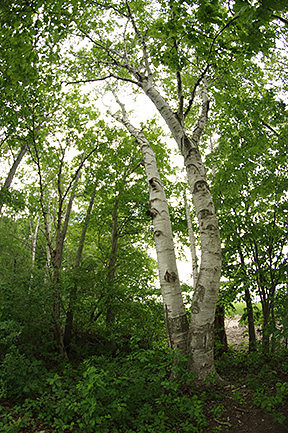
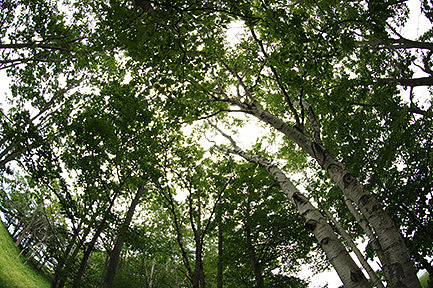
Birch trees, one of my favorite subjects to photograph, something that always brings me joy. Falmouth, Maine I have fallen into this mental trap on numerous occasions myself. Sometimes, it can get so bad that I can’t even pick up the camera at all. And, for me, that hurts more than can be described. One of the things I’ve found that helps break me out of the cycle, frees me to get out there and simply find joy in taking photos is experimentation. I purposefully will grab a piece of kit or decide to photograph a subject or try a technique that I’m not very familiar with. Knowing that I’m inherently not going to ‘be any good’ because it’s new takes away all the pressure. I can then just go out and have fun. It doesn’t matter how the images come out. The point is I’m out there with my camera and enjoying myself. I might come home with some completely horrible photos, but that’s ok. I’ll be able to look back at them and remember how much fun that day was, rather than tearing myself down about how bad they are.
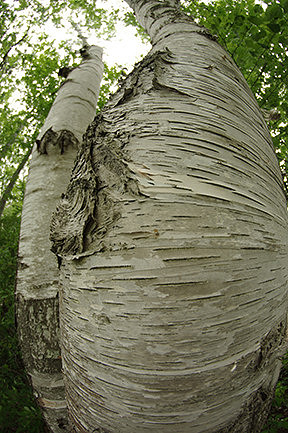
A fun close-up photo of a birch tree taken with a fish-eye lens. Falmouth, Maine Let me give you an example. A few years ago, I was having a bit of a rough time. I’d been doing photography for a very long time but had only really just started to get into social media, especially YouTube. It was great! I was seeing videos from places all over the world and hearing about photography from lots of people with different perspectives. I was learning about new techniques and new processes. But, it started to get me down. I started thinking that I had been wasting all this time, that nothing I’d done was any good, that because I didn’t shoot exactly the way they all talked about, I obviously wasn’t a good photographer. I fell down the rabbit hole and found it harder and harder to look at my own photos, let alone pick up the camera to go out and try anything new. Then, one day, a friend of mine reached out. She wanted to go check out a local garden that had peonies blooming and wanted me to come with her. A lot of times, when I go out with friends, I can’t spend a whole lot of time on photography, but I usually bring a camera just in case I see something. So, I decided to bring a camera like usual, but rather than have any pressure on myself, especially as I likely wouldn’t have the time to devote to trying for ‘good’ photographs, I decided to experiment.
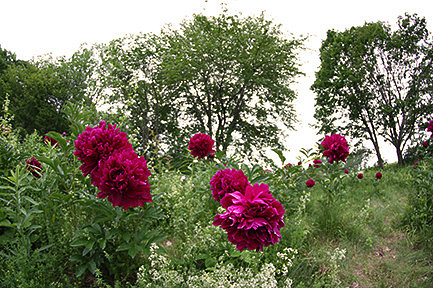
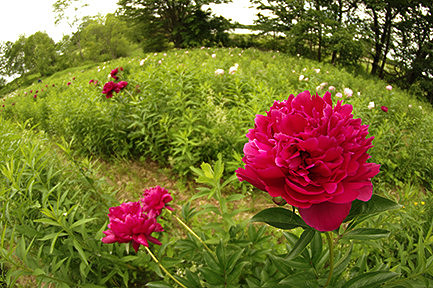
Some of the peonies at Gilsland Farm Sanctuary. Falmouth, Maine I grabbed a fish-eye lens that I had not yet used before and attached it to my camera body. I didn’t bring anything else. No other lenses, no tripod, nothing. I was just going to wander around the garden with the one camera and lens and see what sort of weird photos I could come up with. The ice was broken, and I was able to leave the house with the camera. We spent several hours exploring the gardens and the grounds that day, and it was a blast. Using a lens that I’d never used before, knowing it could produce weird effects, knowing I wasn’t likely to get anything spectacular was so completely freeing. I was able to simply wander around snapping photos and enjoying the act of photography again. And, in the end, I actually came away with some images that I really liked.
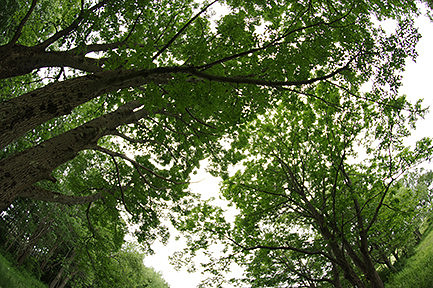
Trees and the distorted landscape as seen through a fish-eye lens. Falmouth, Maine
A field of peonies with a curved horizon created by a fish-eye lens. Falmouth, Maine So, I want you to remember that. If you’re trying to learn photography and trying to improve as a photographer, it’s important to do more than just learn and practice. It’s equally important to just spend time having fun with your camera. You never know what will come of it, but if nothing else, it will relieve the pressure, help your mental state, and keep your love of the craft alive.
Trees and the distorted landscape as seen through a fish-eye lens. Falmouth, Maine |