Wildlife Photography: Piping Plovers
January 13, 2024
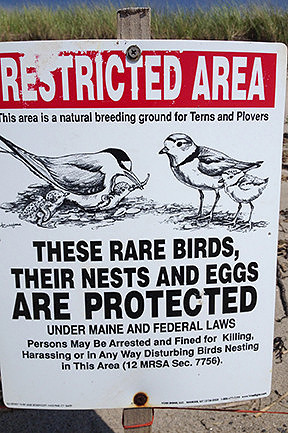
During the latter part of the spring of 2019, I had started trying my hand at bird photography, as discussed in a previous blog post. I spent the first few weeks of that time learning what I could about birding and bird photography and practicing what I’d learned so far on larger birds. It was at that same time that I had heard the Piping Plovers were nesting on Maine’s beaches. I wanted to try and see if I could find and safely photograph these tiny birds, implementing everything I’d learned so far. At that point, I moved away from larger birds, and for the next several weeks, the Piping Plovers became the sole focus of my photography. I headed out to one of the nearby beaches one evening. I didn’t bring any equipment. I just wanted to walk around and see what I could find, learn the layout, and if there were any nests, familiarize myself with the rules for the beach. It was quite chilly with the breeze blowing in off the water, and I soon realized I was way underdressed. There were signs posted everywhere cautioning folks about nesting terns and plovers. Huge swaths of sand were roped off. I walked carefully along the outer edges of the ropes, looking every which way but also checking underfoot before each and every step. If any eggs had hatched, the chicks would be so tiny they could easily be missed.
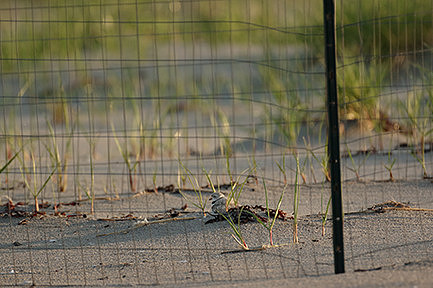
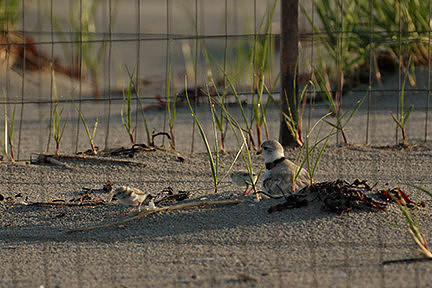
Soon, I came across a circular fence that the town had installed well within the roped off area. This enclosure meant there was a nest! I could see an adult hunkered down inside the enclosure and assumed it was lying on the nest, keeping the eggs warm. I stayed for only a moment to observe, then started to make my way back. That cold breeze was really starting to get to me. Along the way, I met a woman out for her daily walk who lived further up the beach. She gave me some useful tips about the birds and told me about a few more nests further down the beach. She even offered her driveway as a place to park in the future if there weren’t any parking spots available. That was really nice of her. I thanked her for everything, then continued on my way. I returned the following week, early on Monday morning, this time with my stool, camera, and tripod. I was prepared for the cold this time, all decked out in a hat, gloves, and my big winter coat. I felt a little ridiculous wearing all of that in June, but it’s all too easy to get cold when hunkered down for hours in the early morning or late evening. Even at that time of year, when there’s a strong ocean breeze, temperatures can be much lower than you’d expect. I walked slowly and carefully through the soft sand over to where I’d seen the nest before. I spotted the adult Piping Plover almost immediately. As soon as she came into view, I stopped and set up my gear. I was still quite a ways down the beach from the nest with plenty more room to walk while staying outside the ropes. However, I wasn’t sure how she’d react to my presence, and I didn’t want to do anything to disturb her.
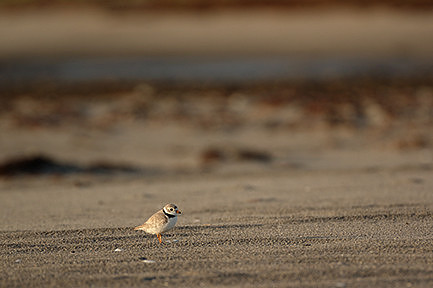
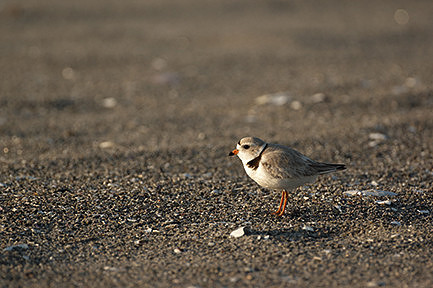
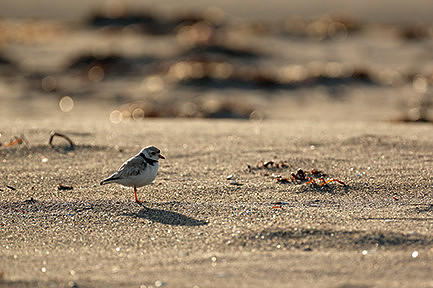
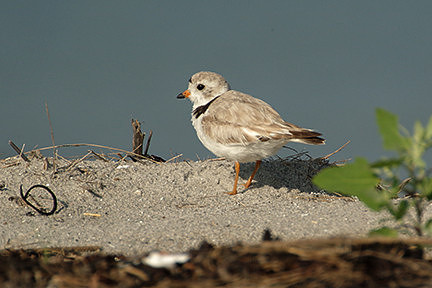
She didn’t appear to be bothered, so after several minutes, I picked up my gear and moved closer. She still seemed ok, so I moved to a new position even closer. I went ahead and set up there, right next to the rope boundary so that it wouldn’t be in any shots. She still did not seem bothered by my presence, so that was great. As I settled in, I realized there had been another nest that I’d passed. It had been blocked from view by the sand and grass, but there was a bird on the nest there, too. I took a few test shots, then turned to look around. There were other Piping Plovers all around the beach. Some were probably mates to those on nests, while others may not have had any nests yet. There was one off to my left that allowed me to spend some time taking his photo. He would wander around, come close to inspect me, wander off a bit, and hunker down in the breeze to keep an eye on things. He was a great subject, nicely lit by the sun, and definitely didn’t seem bothered by my presence.
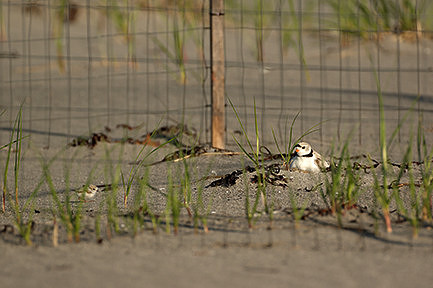
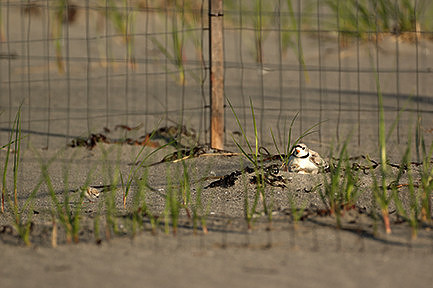
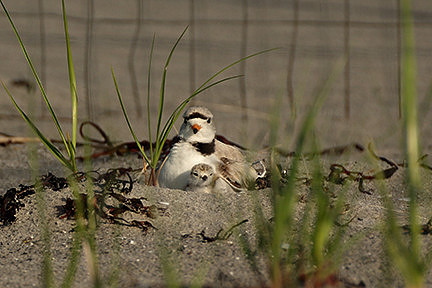
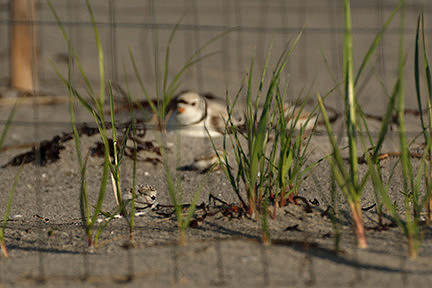
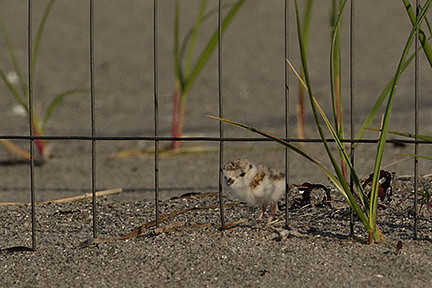
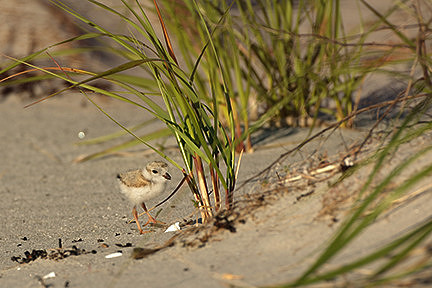
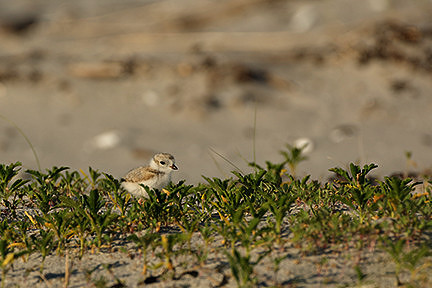
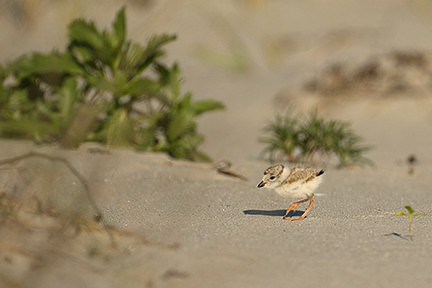
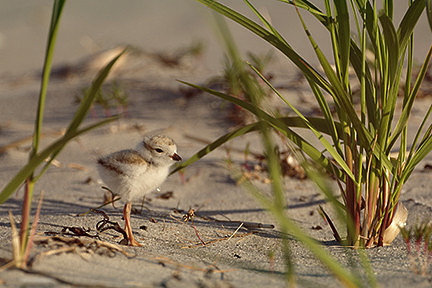
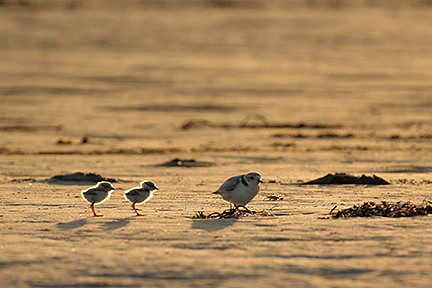
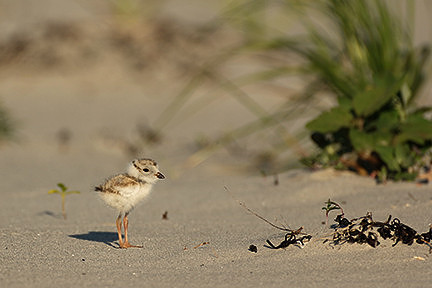
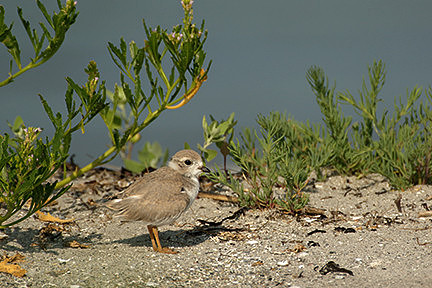
After a little bit, I decided to shift positions slightly. I couldn’t really get any good photos of the nest. The rope kept me quite a distance from the enclosure (for good reason), and that mean the enclosure itself would appear in any photos. But, there were a lot of birds to my right, and I was worried I was making them uncomfortable. So, I moved a few feet further away to give them space so they could go about their business undisturbed. That seemed to do the trick. Once I set up in my new position, I noticed the bird on the nest shifting about. Then, to my utter amazement and delight, I discovered there were chicks, not just eggs! I spied one, then two tiny little fluff balls run out from under their mother into the sunshine. They were so adorable and so tiny! If you don’t know, an adult Piping Plover is only about the size of your hand. These chicks were about the size of a cotton ball with toothpicks for legs!
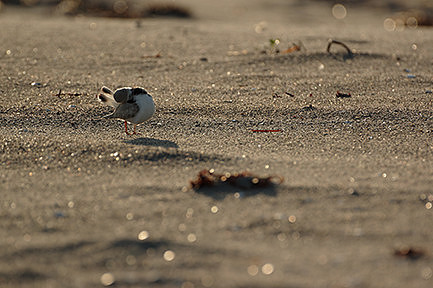
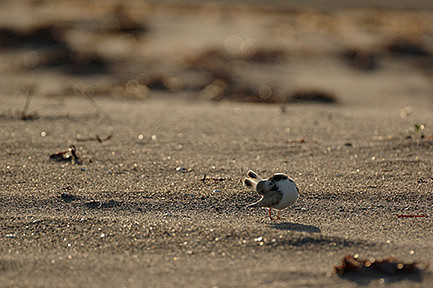
I took only a few photos of them before being distracted by another adult. He came running towards me from around the side of the enclosure before coming across and hopping up on a little clump of sand. I watched him to make sure I wasn’t causing him any stress, but he just stood guard, surveying the beach. Then, he ran down a bit closer to the water between me and all the other plovers. He proceeded to start preening, and I took the opportunity to practice photographing him beautifully backlit by the sun.
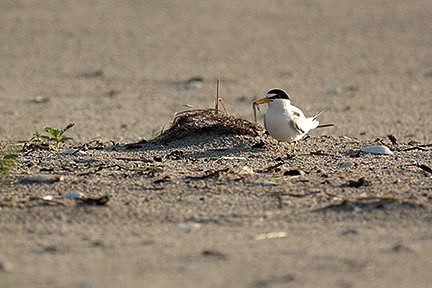
A little while later, I noticed a different bird not too far from me. I believe it may have been a Least Tern. It had some sort of tiny fish or worm dangling from its beak. A second tern soon joined it. They seemed a bit confused and a bit concerned. I wasn’t sure what was going on and wondered if they too had a nest nearby. Soon, though, they both took to the air, and I turned my attention back to the plovers.
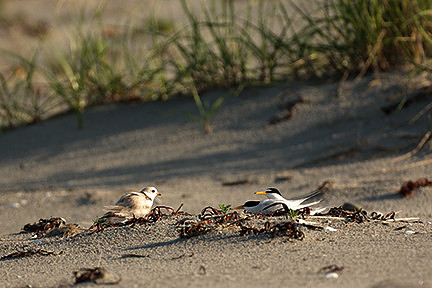
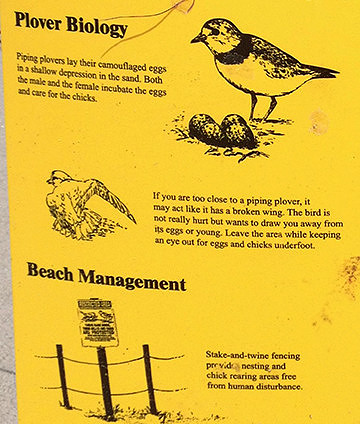
About a half-hour after the backlit, preening plover first made his appearance, he headed into the enclosure and switched places with the mother. Now, I’m saying that it was mother on the nest first, then father, but in truth, I don’t know. If it’s even possible to tell the difference between males and females, I certainly can’t, and they share equally in providing warmth and protection to the eggs and chicks. So, I will continue as is, knowing full well I may have it wrong. The two terns were back, nestled behind a small clump of sand behind and to the right of the enclosure. Once the mother plover was free of the nest, she wasted no time in running over to the terns. It was interesting watching and photographing the exchange. She obviously felt they were too close to her babies. She charged right in to face off with them and forced them both to take to the air. Both of the terns circled around and landed behind her. She turned to face off again. At first, it looked like she was doing the broken wing tactic, but I don’t think that was it. I think she was just spreading her feathers to look larger before turning to charge at them again. One took to the air, and she chased after it on foot. Then, she circled around to approach the other tern, which hadn’t moved. She switched gears and walked out of sight away from this tern. After a minute, he flew off as well.
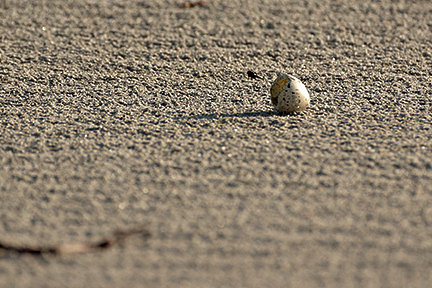
The terns were still acting strange, darting about in the air above me and the enclosure. I hoped the mother plover hadn’t chased them off their own nest. But, at the same time, I felt that wasn’t it. The way they were swooping closer to my side of the area, the way they’d landed before with food but not knowing what to do. I started looking around my side of the beach in the area between the two enclosures, out to the rope, and beyond. Eventually, I spotted the problem. There was a broken empty egg lying all alone in the sand. The way the ruffles in the sand looked, my guess was the eggshell had blown there in the wind. There were no tracks anywhere nearby. So, I don’t know if a predator had gotten to their egg before it hatched or not, but I suspected they had lost their young one. One of the terns landed not too far from the egg. It stood there looking around for a moment or two before taking to the air once more.
It was very sad, but obviously, there was nothing I could do. The plover chicks had made a reappearance, so I turned my attention and my camera back to them. I decided to move position once more. I wanted to put a little distance between myself and the broken egg. Also, the other plovers had moved a bit further down the beach, so I felt comfortable moving in that direction to try to get better images of the chicks.
They were adorable, running around the enclosure to explore, then dashing back to daddy to take shelter. As I watched and photographed them, I was surprised to realize there were actually three chicks! The third one must have been hunkered down before. I wasn’t sure at first, but then I finally caught all three of them in one frame. They were unbelievably fast moving for such tiny creatures so young! I spent most of my remaining time trying to get images of the chicks. It was difficult, and because they remained in the enclosure, the photos weren’t great, but I still had a lot of fun trying.
Before long, it was time to pack up. The two terns had returned and were nestled down in the sand near the broken egg as if on a nest. I felt really bad for them and made sure to give them a wide berth as I headed out. My head was on a constant swivel, desperate to avoid disturbing or stepping on any tiny birds running around. I made it out safely and couldn’t wait to come back. I returned to this location five more times over the next several weeks. Each time, I’d walk carefully out onto the beach until finding my little family of Piping Plovers. Once I’d find them, I’d set up shop and generally stay in that one spot for the next hour or two. I was so lucky to spend the time I did with these chicks, seeing them grow up.
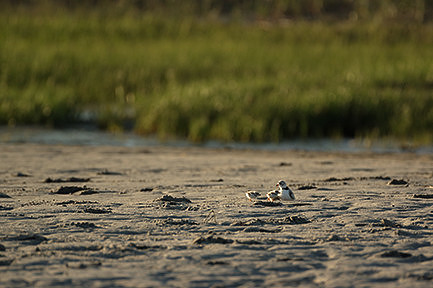
I felt as if they recognized me, as they were never afraid. They’d run all around, exploring, playing, feeding, sleeping. They’d come close to investigate. One of the parents would sometimes also come close and settle down to keep watch while the other remained out closer to the chicks. Yet, when other beachgoers would appear on the scene, they would all scamper into the dune grass to hide or duck into little holes in the sand if too far out on the beach. Seeing that behavior gave me heart. Not only did they trust me, they did not blindly trust all humans because of me. It made me very hopeful for their survival into the future.
For those few weeks, I spent a lot of time photographing and observing the little family. I was fortunate to also see other Piping Plovers, as well as chicks from a different nest a few weeks behind this family. I learned a lot about these little birds, as well as the conservation efforts around them.
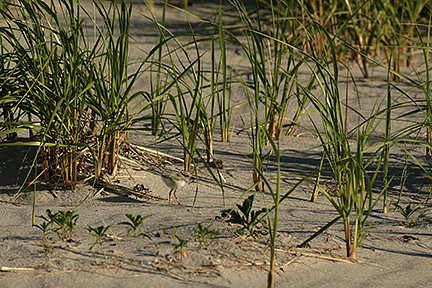
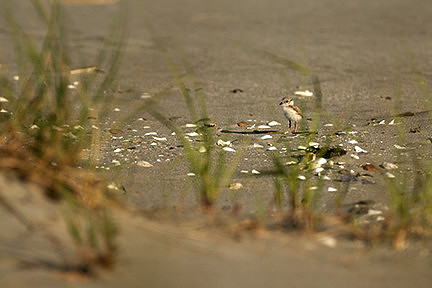
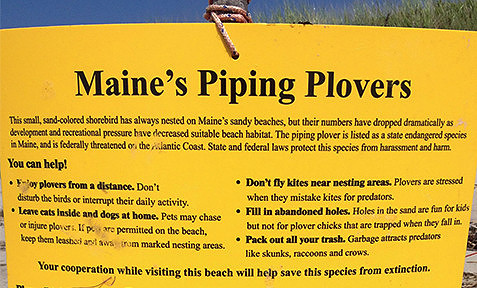
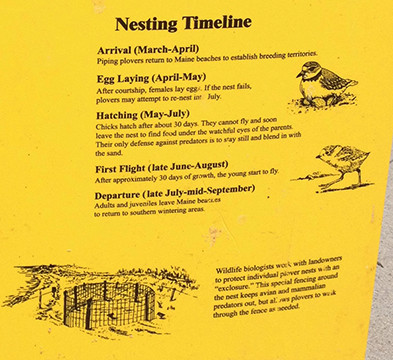
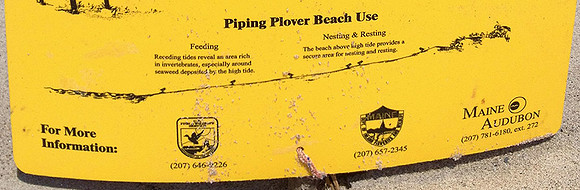
Piping Plovers are only found in North America. They are considered threatened on the national level, and here in Maine, they are endangered. Traditionally, they have always nested on our sandy beaches, but with development and the influx of human traffic on our limited beaches, their numbers have dwindled alarmingly. Consequently, they are now protected. In the spring each year, towns across the state rope off sections of beaches where plovers have been known to nest. Once a nest has been spotted, wire enclosures are also erected to provide additional protection. As mentioned previously Piping Plovers are very small. The chicks are able to be up and running within a matter of hours from hatching. Unlike a lot of other birds, the chicks feed themselves. The plovers feed on the tiny insects, marine worms, and crustaceans found in the seaweed and detritus left behind by the tide on the beaches. So, shortly after hatching, those tiny little fluff balls will potentially be running down the sand away from the nest, looking for food. They are so small and so well camouflaged, it’s easy to miss seeing them.
This means that you need to take extra precautions when visiting a beach with Piping Plover nests. First, follow all rules sign-posted by the state and town. If you have a dog and are allowed to bring it on the beach, keep it leashed at all times. Stay outside any roped off areas, but also walk where advised. Watch every step you take to avoid stepping on any chicks hiding in the sand. If you, your dog, or your kids dig any holes in the sand, fill them in when you’re done so no chicks can fall in and get trapped. Try not to ‘clean up’ the beach of the natural debris, as this is a vital food source for Piping Plovers. Try not to set up ‘camp’ between nests and the water’s edge so they are free to run back and forth to feed without fear. And, remember, if you do see any plovers or their chicks, give them plenty of space.
After three or four weeks, the chicks were able to fly. At that point, they were zipping all over the place, so it became impossible for me to continue photographing them. I wasn’t even sure if they were still there or if they’d left for a different location. I returned one last time to photograph the chicks from the other nest, but I didn’t feel as much of a connection with them. They were still adorable, and I loved the experience and the photos I was able to capture, but I felt my time with the plovers had come to an end, at least for that year. I still planned to try again in future seasons and possibly other locations, but for now, I was satisfied with what I’d witnessed and recorded this year. I was grateful for the time I’d been able to spend with them and that none of these chicks had met an unfortunate end due to predation or human accident. It was a great experience, and one I hope I’ll never forget.
~ ~ ~ ~ ~ ~ ~ ~ Click here to see more bird photos. |