Abstract Photography
October 14, 2023
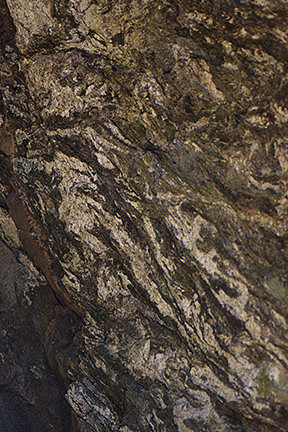
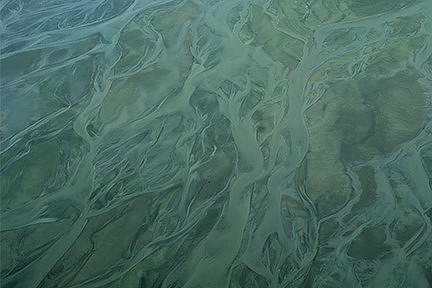
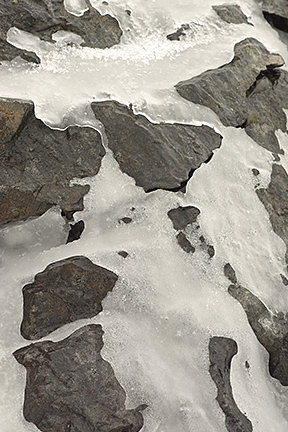
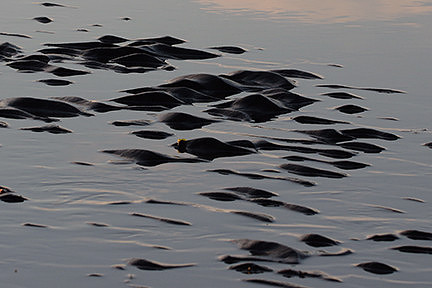
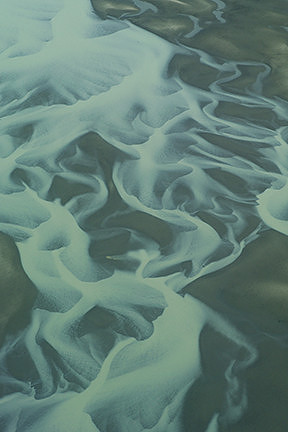
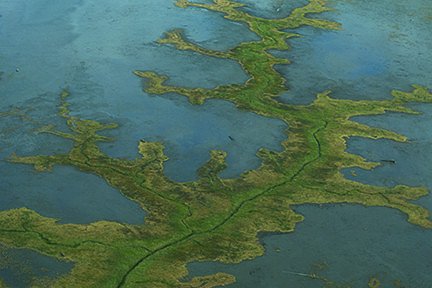
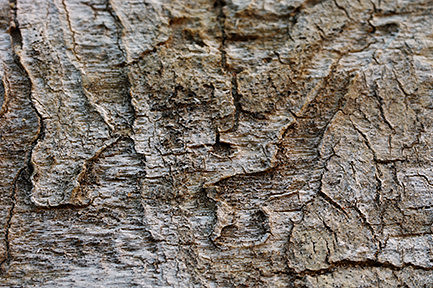
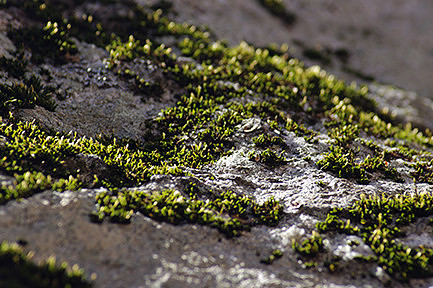
Today, I’d like to talk about abstract photography. “Ok,” you might be thinking, “but what is that?” Well, that might be a bit more complicated to explain than you might think. I’m not sure there is any one definition. As the years have progressed, I’ve noticed that a lot of photographers seem to have different ideas about what classifies as an abstract photo. So, for today, we’ll simply discuss how I interpret the genre. Let’s start at the beginning. According to Dictionary.com, the word ‘abstract’ as an adjective means “thought of apart from concrete realities, specific objects, or actual instances.” If we go a bit further and look up ‘abstract art’, we find that it was “a trend in painting and sculpture in the 20th century. Abstract art seeks to break away from traditional representation of physical objects. It explores the relationships of forms and colors, whereas more traditional art represents the world in recognizable images.” Now, if we shift to Wikipedia, we see that ‘abstract photography’ is considered “a means of depicting a visual image that does not have an immediate association with the object world and that has been created through the use of photographic equipment, processes, or materials.” For me, this means that any time I make an image where the graphic shapes or colors are the primary focus, rather than the item itself, it is abstract photography. Consequently, the viewer may or may not be able to determine what the object is when looking at the photograph. Lines, shapes, textures, colors, patterns are what draws the eye to the photo. Additionally, trying to puzzle out what the object is afterwards adds a secondary interest to the photo.
There are different ways you can make an abstract image. One of my earliest methods was to intentionally put my lens on manual focus and throw everything completely out of focus. For example, I might have liked the colors of autumn leaves against a blue sky. If the leaves would be in focus at 15 feet, completely filling the frame, I’d turn the focus ring on the lens all the way as if I was focusing on something inches away. This would drastically blur all the leaves, leaving me with only the colors and general shapes to make up my image.
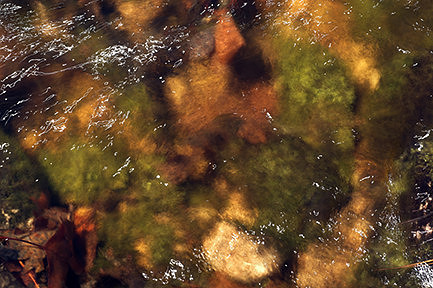
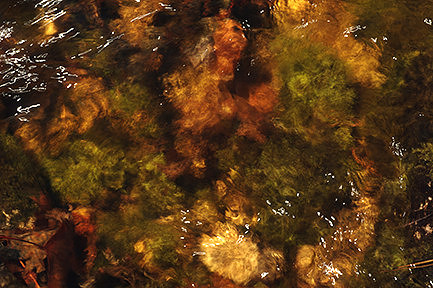
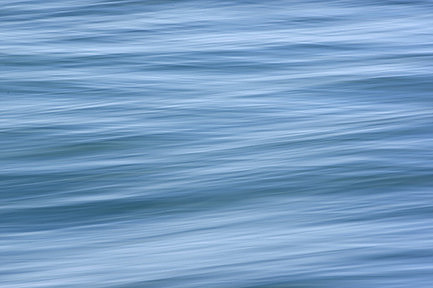
Another technique was to simply look for interesting shapes or lines in the world around me. It could be something as simple as froth in the water caused by a boat’s motor. Or, lines in the thin ice formed over small puddles. Or, the play of sunlight and shadows that obscured the true nature of the object below.
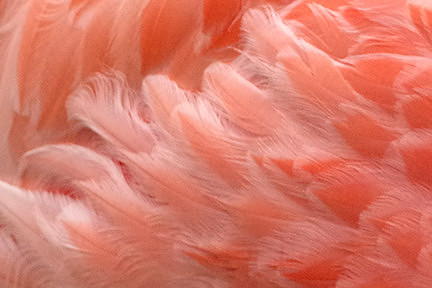
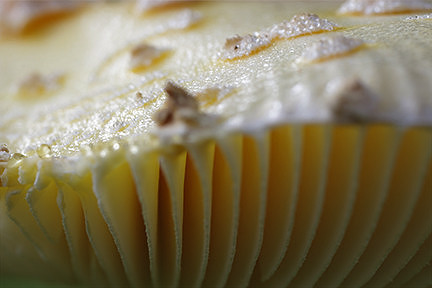
Macro and close-up photography can be another great way to create abstract images. When dealing with things that are very small, to view them at a much larger scale than normal can cause the brain to misinterpret what it’s seeing. Conversely, to look closely at a small section of a much larger whole can create the same effect. For example, the rough surface of a mushroom can look like an alien landscape. Or, sunlight glistening off the iridescent feathers of a bird, but the image is so close up that all you see are colors and lines.
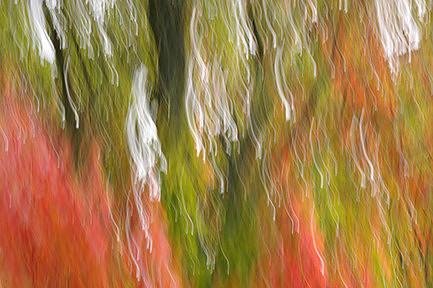
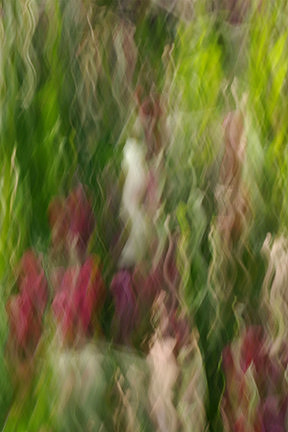
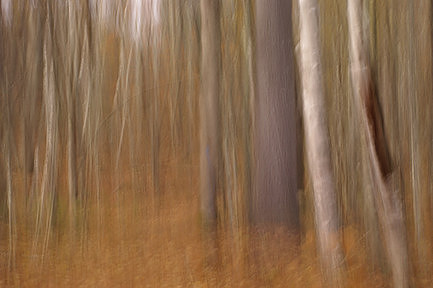
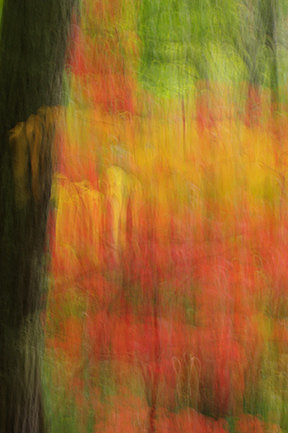
My favorite technique, most recently, however, is intentional camera movement, or ICM. This is where you use a slow shutter-speed and move the camera in some fashion while the shutter is open. You can move the camera up and down, side to side, zoom the lens in and out, rotate the camera, or jiggle the camera. The different types of movement, speeds of movement, and length of time the shutter is open will create different effects. It all depends on what look you’re trying to achieve. These combinations can then result in only an impression of what the scene or subject was, such as with trees in the forest. Or, it can create fantastical shapes where it’s almost impossible to tell what the original subject was. Some people like to have the camera on a tripod while doing this. I find, however, that I get much more interesting results when handholding, since the movements will never be perfect or identical.
I think you’ll find abstract photography can be a lot of fun, something easy to do, any time, anywhere. It’s something anyone can do with any type of equipment. I find this type of photography fascinating and very freeing. It allows you to notice the little things, to experiment with your creativity, to not worry about capturing the perfect image or depicting the subject just right. It is a great tool to use when you’re in a photographic rut or to help you grow as a photographer. For me, it’s been a great way to find some joy when I’ve been very depressed or anxious. There is no right or wrong way to do it, and so there is no pressure. So, I challenge you to get out there and give it a whirl yourself. If you open your mind to the possibilities, you can make abstract images anywhere. ~ ~ ~ ~ ~ ~ ~ ~ Click here to see more abstract photos. |