Trip to Minnesota
July 15, 2017
I just recently returned from a trip to Minnesota where I participated in my first ever photography workshop. For most people, when you go on a trip that’s not for business, you either do it as a tour package or as a self-directed vacation. The latter is when you do everything yourself, the planning, the travel, the itinerary, and you/your family/your friends can modify each day as you go, such as a cross-country road trip. A tour package is when you sign up with some kind of company to go to a specific place or places that they offer at the time they offer it and see the sights they guide you to as part of a larger group. For photographers, there are two more options - the photo tour and the photo workshop. The photography tour is similar to a regular tour but with the difference that it is led by a professional photographer for photographers to excellent photographic locations at the best times for great light with lots of time allocated at each location for the most photography possible and with classroom and in the field photography training. I don’t know the technical difference between a workshop and tour, but to me, a photography workshop is more oriented towards teaching photography than on travel. A workshop could be one day or multiple days, could be all indoors, all outdoors, or both, depending on the subject matter, and could involve travel, only in that you have to travel to the location of the workshop, but it’s generally in the one location the entire time. So, for me, I would classify my trip to Minnesota as participating in a photography workshop rather than doing a photography tour. This particular workshop was for wildlife photography, specifically black bears. It was led by Charles “Chas” Glatzer and his company, Shoot the Light. He’s a Canon Explorer of Light and has done wildlife photography for over 20 years. (If interested, click here to visit his website.) I knew I could learn a lot from him and signed up for the workshop last spring, getting one of the last available slots.
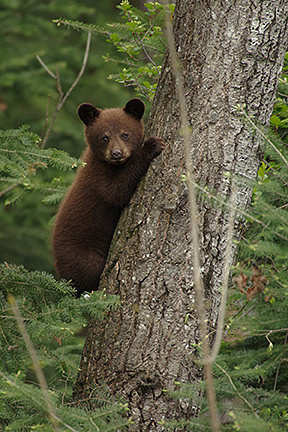
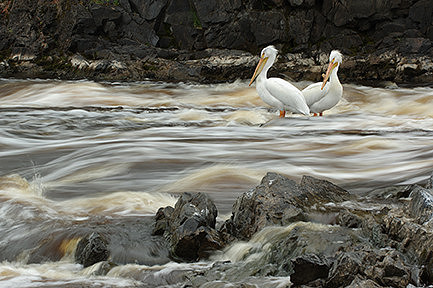
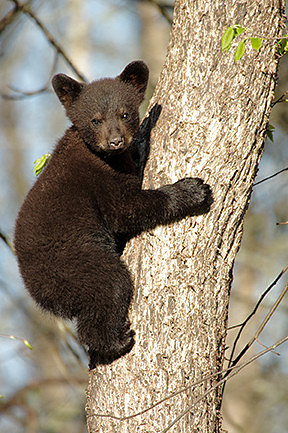
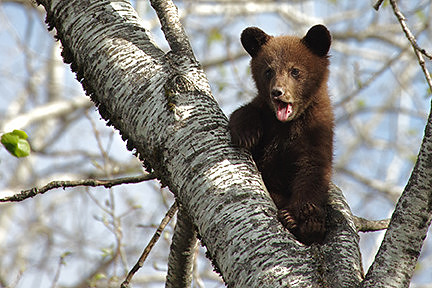
Black bear spring cub in a tree. Black bears aren't actually always black. There are three color phases: black, brown, and cinnamon. This little guy is a cinnamon variant. Vince Shute Wildlife Sanctuary, Minnesota When it came time for the trip, I decided to prepare for anything. Northern Minnesota is a lot like Maine, and it’s still been pretty cold and rainy here. And, after all the night photography, I’ve come to realize that when you spend hours on end outside, even if the temperature isn’t too bad, it gets cold after a while if you aren’t actively moving around. So, I brought everything from shorts to my winter coat and all the layers in between. As for photography gear, even though this was a wildlife trip, I still brought all my landscape gear. I didn’t know what opportunities I’d have, but I had a day and a half on my own at the end, so how could I not bring it. The first day was a travel day. I left home early in the morning and drove to Portsmouth, NH where I caught the bus to Logan Airport in Boston. From there, I had a direct flight to Minneapolis, arriving at lunchtime. I picked up a rental car and drove north out of the city. It was a complete downpour with extremely low visibility. Consequently, I couldn’t really get a feel for the countryside I was traveling through. I arrived at my destination in the tiny town of Orr on Pelican Lake late in the afternoon. That evening, the workshop attendees gathered in the motel lobby. It was a small group. Aside from Chas and myself, there was Bob from Florida, Steve from Minnesota, and Ken from New York. Apparently, one more was supposed to show up later, and another had to cancel last minute. We spent a few hours talking, getting to know each other, learning some of the nitty-gritty details about photography, and looking at different photos from Chas to explain different points. It was great to be able to interrupt and ask questions for clarification or about specific things in relation to my gear and how I shoot. It’s been a long time since I’ve been able to do that. The next day, after meeting our final member, Phil from Kansas, we piled into two vehicles and drove north to the Canadian border. We took a quick break when we reached the town of International Falls, then continued on to our final destination. By the time we arrived, it was overcast but not actually raining. Our goal for the day was to photograph White Pelicans. Unfortunately, there was only one pelican in the water nearby. All of his buddies were farther out on two little islands. There were a couple of guys fishing off the rocks, and in the pools of water at our feet, there were huge Lake Sturgeon spawning. However, neither the birds nor the humans were interested in the sturgeon. Luckily, the gentlemen left before long, and eventually, some of the other pelicans came to join their friend.
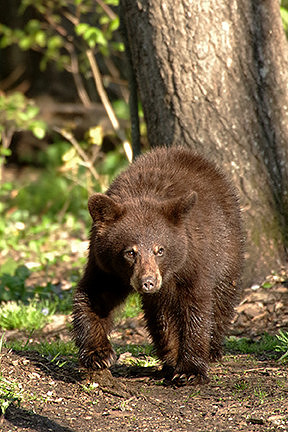
Because of the low light, we concentrated more on doing shots with slow shutter speeds to get silky water than birds-in-flight. According to Chas, the pelicans have a hard time seeing the fish when it’s overcast because the water reflects the bright gray of the sky. So, we didn’t really get any photos of them fishing, either. However, it was really a lot of fun, and I took a ton of photos. Like with my landscape photos, I tried from different locations, different angles, horizontal and vertical, zoomed in tight, wide, and everything in between. I tried to get some that froze the water and kept the details of the bird crystal clear and others that blurred the motion of the water and the birds. On Monday, we carpooled once again and drove to the other side of Pelican Lake to the Vince Shute Wildlife Sanctuary. The sanctuary is open to the public from the end of May to the beginning of September, but Chas has a special arrangement with them that allows his groups access in the two weeks prior to opening. The sanctuary is over 500 acres of forest that is protected for the black bears and other animals that live there. There are no fences; it is completely open so that the wild animals may roam freely. Within the sanctuary, there is a small area open to the public with a gift shop and viewing platform. In the clearing around the platform, the workers put feed out for the birds, squirrels, chipmunks, and bears. So, if you visit, you have a good chance of seeing wild black bears come out of the woods into the meadow to feed and interact with each other. There is even a wolf pack living in the area, and Chas told us he saw one of the wolves with his group the week before. Another of the special arrangements Chas has is for his groups to be allowed to walk on the ground, as long as they stay in the meadow and do not go past the treeline. I wasn’t comfortable with the idea of being on the ground yet and planned on keeping to the platform, at least for a while. We had just arrived, and already there were several bears around. There was one coming out of the woods back down the road near the stairs onto the viewing platform. And, one of the workers told us that if we hurried, we might see some mating going on around the corner. Everyone took off in hopes of getting shots of the bears mating. I did not. Instead, I hurried to the stairs to climb up onto the platform before that bear got too close and was able to get a photo of him with my phone as he walked by. I spent the rest of the morning on the viewing platform by myself while the others wandered around on the ground. It was overcast and rainy, so the bears were quite active. Chas had told us that we needed to try and keep our shutter speeds up at least to 1/500th of a second in order to freeze the bears as they moved around. With the lower light, that meant having the ISO up around 3200, so I was once again super thankful for my new camera and its better low-light sensitivity.
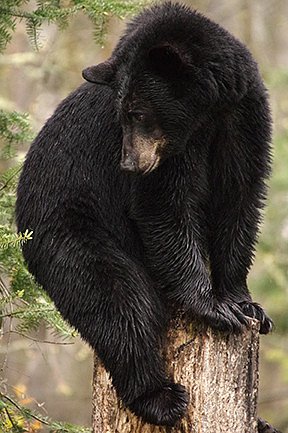
Juvenile bear perched on a stump. Vince Shute Wildlife Sanctuary, Minnesota We saw individual bears of different ages, as well as families of bears. There were spring cubs (tiny little 3-month-old balls of fluff), yearlings, 2-year-old cubs that had just dispersed from their mothers, juveniles, and adults. Some would interact with other bears, while others were ignored, and still others would run away or scamper up into the trees at a bear’s approach. Most of the time, though, the bears would just wander from feeding station to feeding station before disappearing back into the woods.
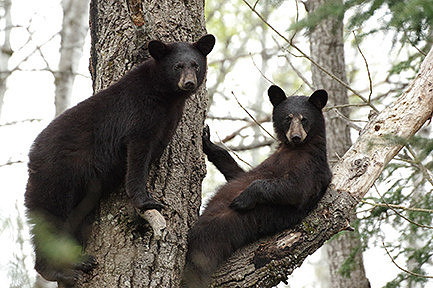
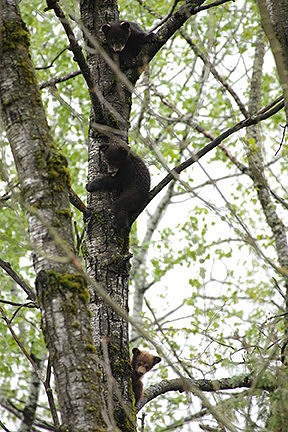
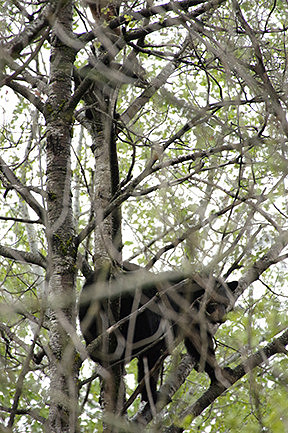
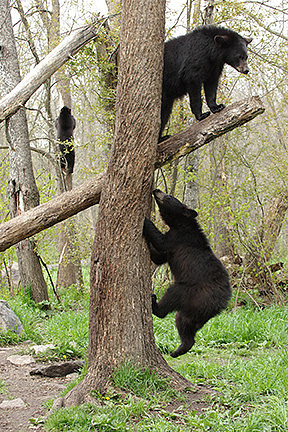
Yearling cubs hanging out in a tree. Vince Shute Wildlife Sanctuary, Minnesota At one point, I noticed the others over by some of the buildings, all with their cameras pointed up into the trees. I headed in that direction along the platform, wondering if it was some spring cubs, hoping I could see them. I hadn’t actually seen any yet, and they were what I most wanted photos of. I got back over near the cars, and sure enough, there were 4 tiny cubs way up high in a tree. A little ways farther down, there was an adult bear in the tree, looking up at them. I had stopped next to one of the workers, and he told me that was the mamma bear. Something had spooked them, so the cubs ran up. Then, a moment later, something had spooked her too, so she went flying up after them. He’d never seen a mother bear go so high up before; it was at least 50 feet! There were a lot of trees between me and the bears, but I was able to get some photos until they eventually all came down and melted into the woods.
Three of the four little cubs high in a tree. Bears have delayed implantation, so a mother could have cubs in one litter from multiple fathers, which can result in cubs of different color phases than each other and their mother. Vince Shute Wildlife Sanctuary, Minnesota
After brunch, we had some classroom time for a few hours. We went in depth about how exposure works and different metering systems and how to correctly expose when photographing really dark subjects, such as the bears, so that you see the detail in their fur while still keeping everything else correct. There was talk about the difference between full stops, half-stops, and third-stops, and I was able to find out the specifics on my camera, since it wasn’t the same as everyone else’s. That was extremely helpful.
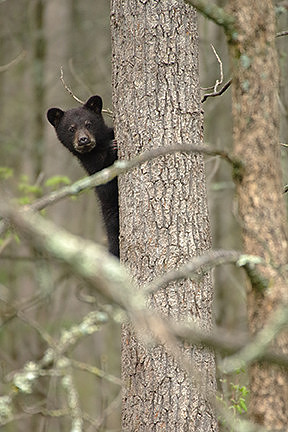
A spring cub from another family peeking out as he climbed up a tree. Vince Shute Wildlife Sanctuary, Minnesota Like many animals, the bears are most active in the morning and in the late afternoon, so our schedule was going to be roughly the same each day - photography in the morning, possible classroom time in the middle of the day, photography in the afternoon. If it were dark and rainy, the bears would be more active for longer periods during the day, so our schedule might change somewhat on a daily basis. So, later that afternoon, we were back at the sanctuary for more photography. This time around, I decided to try being on the ground rather than up on the platform. It really did offer better opportunities for photographs. However, I tried to stick to the group, or at least Chas, like glue. I wasn’t willing to be by myself just yet.
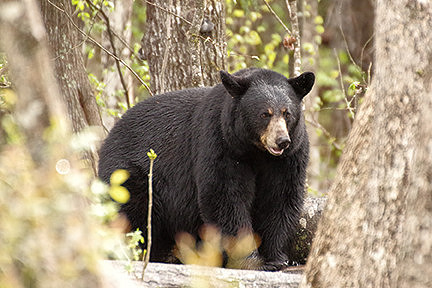
An adult bear investigating a log, looking for food. Vince Shute Wildlife Sanctuary, Minnesota Generally speaking, being on the ground was fine. The bears really didn’t care about us. They just wanted to go about their business, moving from one spot to another. They follow paths, well worn into the grass, and very rarely deviate, so if we were in the way, we’d have to move so it could keep going, but they weren’t ‘coming’ after us. They were just following the path to their next location. However, we were supposed to maintain at least 10 feet distance from the bears at all times, so my head was always on a swivel to watch for bears coming along unexpectedly behind us.
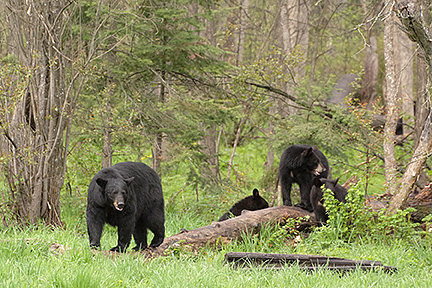
A mother bear and her yearling cubs. Vince Shute Wildlife Sanctuary, Minnesota Now, I want to make a few things perfectly clear. First of all, these were black bears, the least aggressive species of bear in North America. A black bear is more likely to run away from you than anything else when out in the wild. However, they are still wild animals and therefore can be unpredictable and dangerous. If you’re hiking or camping or anything in bear country, get educated on the proper way to do everything from dealing with food to unexpected encounters. The bears at the sanctuary, while wild, have been habituated to humans in the meadow and thus generally ignore them to go about their business. But, the behavior or lack thereof we saw towards us and towards the workers would not likely be the same for a bear in the wild. Be safe; be smart. Do not try this at home.
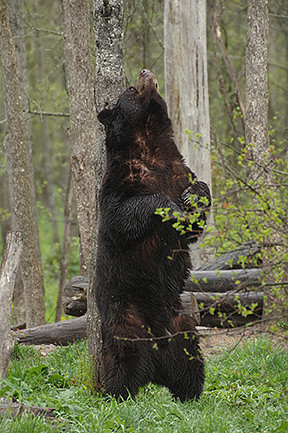
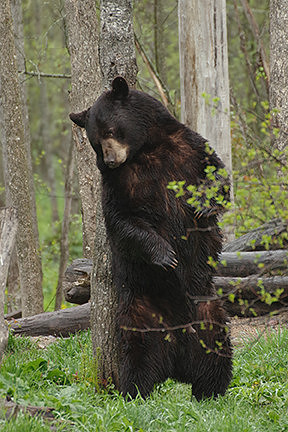
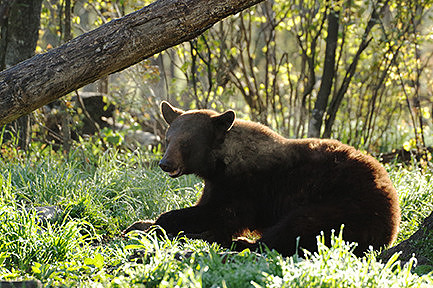
The rest of the afternoon, we saw more of the same type of behavior we’d seen in the morning. The photos were definitely more interesting, and it was definitely more exciting because of the proximity to the bears, now that I was on the ground. But, again, these were wild animals. There was also a lot of time spent just standing around waiting. Sometimes, there weren’t any bears at all. Other times, you could see them in the brush and were waiting for them to come better into view or change position or what have you before you could take the shot. Sometimes, your patience was rewarded and you got a chance for a photo, while other times, they wouldn’t do as you’d hoped, and you’d have to resign yourself to simply observing them, which I have to admit was pretty cool too. The next day, it was once again overcast and drizzly. We were at the sanctuary for a few hours in the morning, starting off with some spring cubs in a tree. One of the big guys wandered around a bit, standing up and scent marking a few trees, which was interesting to see, before he wandered off, slowly following a female out of the clearing. We had another adult lay down near the brook, so we gathered at the far edge of the clearing to try and get some interesting photos there. That was pretty much it for the morning session, not a lot of activity.
The big male scent marking a tree. Vince Shute Wildlife Sanctuary, Minnesota
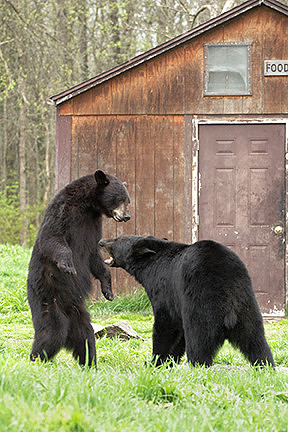
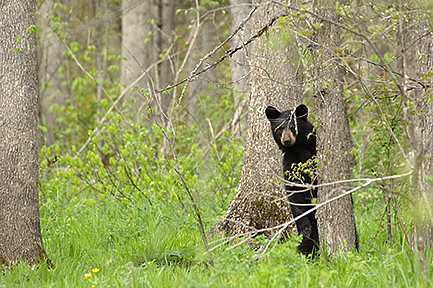
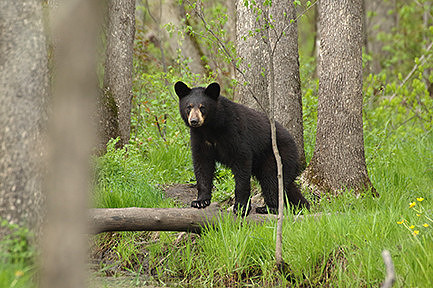
Here, you can see his face as he starts to drop back to all fours. Vince Shute Wildlife Sanctuary, Minnesota After brunch, we came back early, just past lunchtime, to take advantage of the light and weather, hoping the bears would be active given the gloomy conditions. It was definitely a more productive afternoon. We were lucky and got to see a couple of bears sparring, an interesting behavior to watch and photograph. We also had one young bear play peek-a-boo in the woods with us before eventually working up the nerve to cross the log over the brook. That was a shot we’d all wanted to get, so I had let the others know that I’d spotted him slowly making his way there. By the end, the sun had started to peek out from the clouds, making the photos even more interesting. All in all, it was a great afternoon session.
Young two-year old disbursed cub playing peek-a-boo. He was very nervous about coming out of the woods because of the number of adult bears in the meadow. Vince Shute Wildlife Sanctuary, Minnesota
The same young bear pausing again to doublecheck the coast was clear before crossing the log over the brook. Vince Shute Wildlife Sanctuary, Minnesota Wednesday morning dawned crystal clear and cold. The temperature was around 30 degrees, and there was dew on everything and areas of low-lying fog, so we were really excited on the drive to the sanctuary for the photo opportunities. When we arrived, there wasn’t any fog, but the sunlight streaming through the trees and sparkling off the dew was spectacular. There were a couple of adults feeding in the meadow, so I spent some time photographing one that was backlit with steam rising off her fur. It was awesome. Then, someone mentioned a spring cub alone in a tree around the corner from one of the buildings. We all went over and started photographing him. Chas was sure the little guy had been abandoned. Apparently, if a mama bear calls her cubs out of a tree, once she has most of them, she heads out. If one doesn’t come down when called, it gets abandoned. Chas thought that’s what had happened here.
One of the things the director of the sanctuary had told us was to make sure not to spread out around a bear. If you do, the bear sees all the individuals and can feel threatened. Instead, she had said to stay clumped together as a group so the bear sees you as one entity and thus won’t feel threatened. Now, unfortunately, we were spread out a bit photographing that little cub, and the clicks of the shutters were quite loud. He was trying to nap, but as time went on, he kept fidgeting, looking at us, climbing down, going back up. We were obviously disturbing him. So, it didn’t come as a surprise when he started bawling for his mamma. Well, luckily, there were gaps between a couple of the fellows to my left because all of a sudden, she came barreling through from behind us and right up into the tree with him. After making sure he was ok, they both came down, then headed off into the woods away from us. I was so happy he hadn’t been abandoned after all, and in fact, she was the one I’d been photographing with steam rising off her coat.
I spent the rest of the morning experimenting more with the backlighting and the side lighting of the bears’ fur. There wasn’t a lot of activity, only a handful of adult bears, and they pretty much had all disappeared before long. Apparently, their fur gets super hot in the sun, so they really don’t like coming out on sunny days except for early morning and late afternoon. So, we called it a morning a bit earlier than usual.
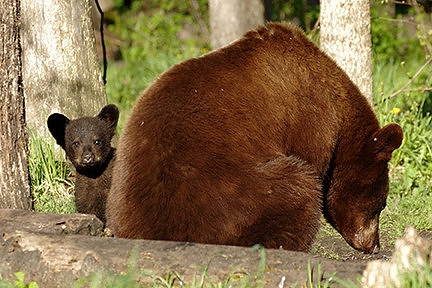
The little cub peeking at us from the safety of his mother's side. Vince Shute Wildlife Sanctuary, Minnesota Since it was such a gorgeous day, we were able to arrange for rental of the pontoon boat at the motel. We spent a couple of hours with the motel owner piloting us around the entire lake looking for birds. We found some more White Pelicans, a few Trumpeter Swans, one Bald Eagle, some seagulls, cormorants, and terns, a Great Blue Heron, and a pair of Loons. It was really quite wonderful.
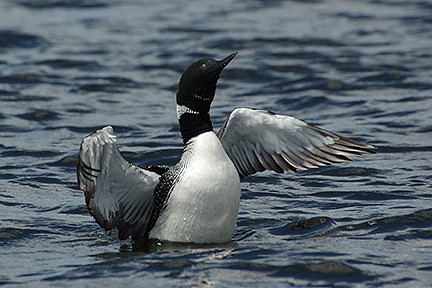
Loon flapping its wings and stretching. Orr, Minnesota The afternoon session still didn’t have a lot of activity, so I spent what time I could experimenting some more with backlighting and side lighting. I also couldn’t help but get some photos of the woods with the sun’s rays beaming through the trees. The rest of the time was spent with more photos like the days before, only this time dealing with bears in direct sun, dappled sun, or full shade.
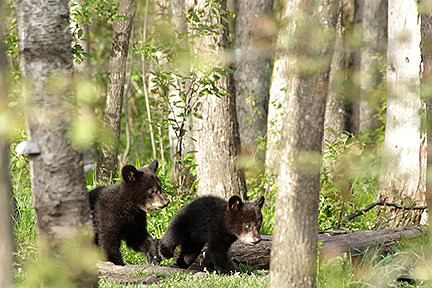
Spring cubs running through the sunlight to join their mother and siblings, who are just off camera at a feeder. Vince Shute Wildlife Sanctuary, Minnesota The next day was the last day of the workshop. The weather was supposed to be about the same but even warmer. Unfortunately, that meant a ton of mosquitoes and very few bears. We did have a small 2-year-old and a few slightly larger bears wandering around on one side of the clearing. Some of the others spotted spring cubs on the other side, but I didn’t get over there in time for any photos. I spent some time photographing the geese in the brook and hoping a bear would cross the log in that beautiful light, but no luck. When we did have bears, I again tried to practice with the sunlight kissing their fur.
Young two-year-old disbursed bear cub cautiously watching a few older bears as he made his way down the path. Vince Shute Wildlife Sanctuary, Minnesota After brunch, we said goodbye to Bob before heading back to the motel for a final classroom session. This time, the class was focused on the science of flash photography and post-processing techniques. It was very interesting, and a few of the guys even shot some video of the things Chas was showing us. Our final session at the sanctuary, unfortunately, also lacked much in the way of activity. I spent some time photographing a little yearling cub with his mother, hanging out near the gift shop. His name was Cashew, and his mother was Peanut. She’s 27 years old and still having cubs. She got her name because she was originally the runt of the litter. She has something like a 75% success rate in keeping her cubs alive, and once they disperse, that percentage only drops down to 60% or so. From what I understand, that makes her a very good mother.
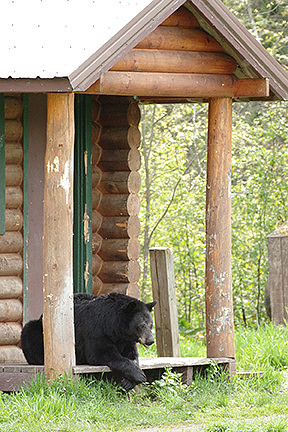
Old bear resting on the porch. Vince Shute Wildlife Sanctuary, Minnesota A bit later, we had a big old bear walk onto the porch of one of the buildings and lay down for a rest. That was pretty funny, even though he didn’t stay there long. At some point, the big male who had done the scent marking and had been following this one female around all week showed up again. This time, however, the female was following him, so we think they might have finally mated. And, that was pretty much it. Phil and Ken had both taken their leave earlier in the afternoon, leaving just Steve, Chas and myself. We decided to call it quits relatively early due to the lack of activity and the fact that there wasn’t likely to be more given the sun and temperature. Friday was my last full day in Minnesota. I had originally hoped to do some exploring and landscape photography. Unfortunately, I had hurt my back earlier in the week, an old injury that flares up occasionally. So, I couldn’t do any hiking to visit the various places I’d hoped for landscape photography. Instead, I decided to go to the town of Ely to visit the International Wolf Center. Back in high school, I had purchased an adoption kit for a wolf named Lakota when the wolf center first opened. I had been really excited to learn that it was located so close to where the bear workshop was being held. I spent most of the day there, attending various lectures about the ambassador wolves kept at the center and about wolves in general. In between the programs, I took what photos I could of the wolves when they made an appearance. It really isn’t a great place to go for wolf photos, but it is a fantastic place to go and learn about wolves and watch their behavior. While the enclosure was quite large, the leaves had filled in almost completely, so you could only see a small area next to the building. The viewing area looked through very thick glass, so you didn’t have chain link fence in between you and the animals, but I found it distorted the images. On top of that, it was a partly cloudy and very hot day, so the wolves were generally staying under the trees or in the caves, hidden from view. When they did come out, it was only for a few moments at a time, generally to drink some water from the little pond. So, I didn’t get any good photographs, but it was still a lot of fun. It was nice to visit the place in person and to reminisce with the employees about Lakota. Later that afternoon, I took a scenic drive through a national forest before arriving on the shores of Lake Superior. While I didn’t get any photos, it was really quite beautiful. And, bonus, I spotted two female moose on the other side of the road just outside of the national forest. I did finally have a chance to do a little landscape photography at Split Rock Lighthouse. There’s quite a little state park there with several walking trails. I didn’t go far from the car, leaving most of my equipment behind, but I was able to get out and get a few photos, making a nice end to my trip.
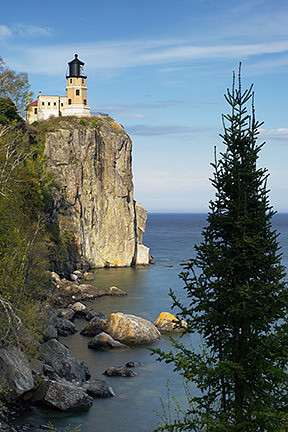
Split Rock Lighthouse in the late afternoon sun, sitting high above the waters of Lake Superior. Split Rock Lighthouse State Park, Minnesota Overall, this trip was very different for me. Staying in one location for the entire time and not doing any landscape photography to speak of is not usually what my vacations are like. However, it was a really good experience. Having the opportunity to photograph wild animals in a location where you know you are likely to see them was pretty spectacular. Back home, when you see a wild animal, it’s usually only a fleeting glimpse. So it was nice to have time to experiment, to figure out the settings, then to work on different compositions and start to figure out what types of images were better than others. You weren’t so excited to simply see an animal that you didn’t have a chance to think about the photo. It was also nice to see multiple animals at the same time. Bears are generally solitary, so it’s rare to chance upon more than one at a time in the wild. The ability to see their interactions with each other was priceless. To anyone who is interested in photography, especially wildlife photography, I would highly recommend doing a photography workshop. You will get so much experience and learn so much, both from the photographer guiding the workshop as well as the other participants, it’s well worth the time and money. And, you’ll come away not only with hopefully some great images, but also a better understanding of the animals and a deeper appreciation for the natural world around us.
Sleepy spring cub high up in the crook of a tree. Vince Shute Wildlife Sanctuary, Minnesota |