The Early Years
October 17, 2015
After receiving my first SLR camera during my senior year of high school, I spent all of my free time photographing my world. I had the kit 50mm lens and a protective UV filter, and that was it. Since money was tight, I didn’t bracket my images as all the experts suggested. Instead, I trusted the camera’s light meter and hoarded my image-making capabilities. I also didn’t experiment with trying different angles for the composition. If I saw something I liked, I took a photo, end of story. Looking back now, I shake my head at the naivety of it. It has taken me a long time to get anywhere in photography, and that process could have been helped along if I simply learned to bracket my shots for exposure and to try multiple compositions of a scene. Those two things would be among the first tips I would tell any starting photographer. I spent quite a bit of time the first few years simply learning the technical aspects of photography. Over time, I started to acquire more gear, so I experimented with flash and exposure techniques. I still had trouble with different lighting situations, and it took time for me to realize that I actually had to learn how to see the light. Once I could see the light and the shadows in a way that the camera saw them, I started being able to understand how to expose for different situations. I also started to experiment with how different lenses affect the composition. I was extremely lucky that my best friend, Savory Atkinson, was an artist. She spent a lot of time helping me learn the artistic side of things, how to see and think about composition. Sometimes, different lenses would help a situation. Sometimes, it was simply moving around and looking at it from different angles. She also helped me see the art in the smaller details, to realize that it doesn’t always have to be big scenics.
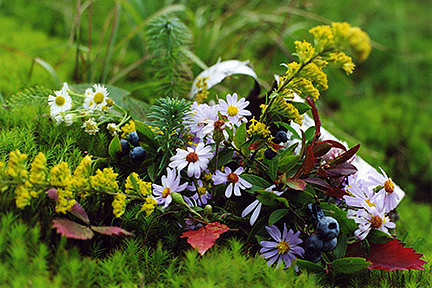
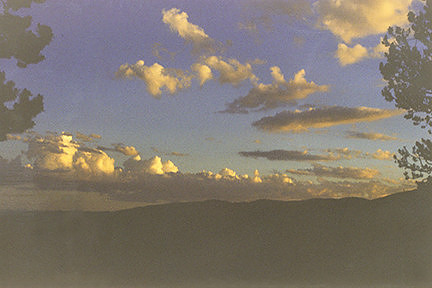
Small arrangement in the woods by my friend, Savory Atkinson. Limington, Maine Another tip for a beginning photographer would be not to take random peoples’ comments of advice as the ‘thing to do’. In the early years, someone would mention to me something that would make my photography better. It’d be a simple sentence with no explanation or even photos to back it up or any way to understand what they meant. I’d take it at face value and go do exactly what they said, and invariably, the photos came out worse than if I’d done it my own way. For example, someone once told me to underexpose a sunset to make the colors really pop. Not understanding what he was trying to say, I pointed my camera meter at the sky and then ignored it, cranking the aperture way down to underexpose it. I took most of the photos of the sunset that way. I took only one the way I would have normally done it. Since the colors in the sky were what was important, not the ground, I pointed the meter at the sky and adjusted the aperture as necessary for correct exposure. That one photo was the only one that came out. By metering on the sky, I was underexposing the ground, but I didn’t understand that was what I was doing or that that was what he meant. I was simply doing what I thought I was supposed to do naturally.
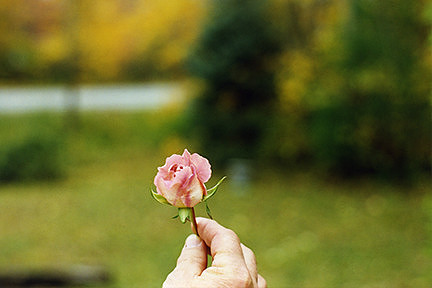
An example of my misunderstanding the advice given me on sunsets. Rocky Mountain National Park, Colorado So, make sure you fully understand what someone is trying to give for advice before you take it. If you don’t understand it, you’re more likely to come away with photos that don’t work. Likewise, when someone gives some advice, take it with a grain of salt. If it doesn’t apply to you and your style of photography, don’t do it. It doesn’t mean they’re right or wrong, just that it may not work for you. That leads me to another tip. Just because someone says ‘Oh, you need to get a photo of this!’ doesn’t mean you need to take a photo. If you’re not feeling it, that will show in any photo you take. In other words, if you force yourself to take something just to take a photo, it probably won’t be that great. If you’re invested emotionally in something, it’s far more likely to produce a better photograph than if you’re not. Here’s an example. Someone once told me to always have a bit of life in your photos. I wanted to take a photo of a beautiful pink rose. He insisted on holding the stem so that his hand would be in the shot, that his hand would make it a more interesting shot. I took the photos to satisfy him, but I’ve never been happy with them.
An example of taking a photo just to please someone else, rather than following my heart. Standish, Maine My final piece of advice is to experiment. It’s going to take time to figure out what you really like to photograph, what your style is, and to develop your voice. In the beginning, photograph anything, photograph everything. Try new things. Most of the time, it won’t work, but if you keep trying different things, you’ll figure out what you like and what you don’t and then figure out how you want to portray it. And, remember, you always want to grow as a photographer, so your style and voice may change over time, and that’s a good thing. I spent a lot of time photographing the people and places around me, events that were happening, still lifes of items that friends and family wanted to sell online, antique automobiles, pets and backyard wildlife, pretty much everything I could. While that means I have a lot of really bad photos, it also means that I was out there trying things, learning things. It’s helped me realize the types of photography I’m more interested in, the direction I want to go, and that some of these other things are best left as snapshots to simply document my life and my world. Photography is not only my art and my passion; it is also a record of my life, my experiences, a physical representation of my memories. And, to me, that’s just as important. |